 Payal Agarwal
 January 5, 2026
 15 min read
 318
318Table of Contents
Introduction:
Your company’s success is closely tied to how employees feel and perform at work. They are the ones building products, serving customers, and keeping the business moving forward. Hiring great talent is only the first step. What truly matters is whether the workplace you build actually helps people do their best work and stay motivated over time.
Gallup’s research shows that companies with highly engaged employees see 23% higher profitability. Yet, improving engagement is rarely as simple as launching new initiatives or running surveys.
This is because engagement does not exist on its own. It is shaped by the experience people have every day at work.
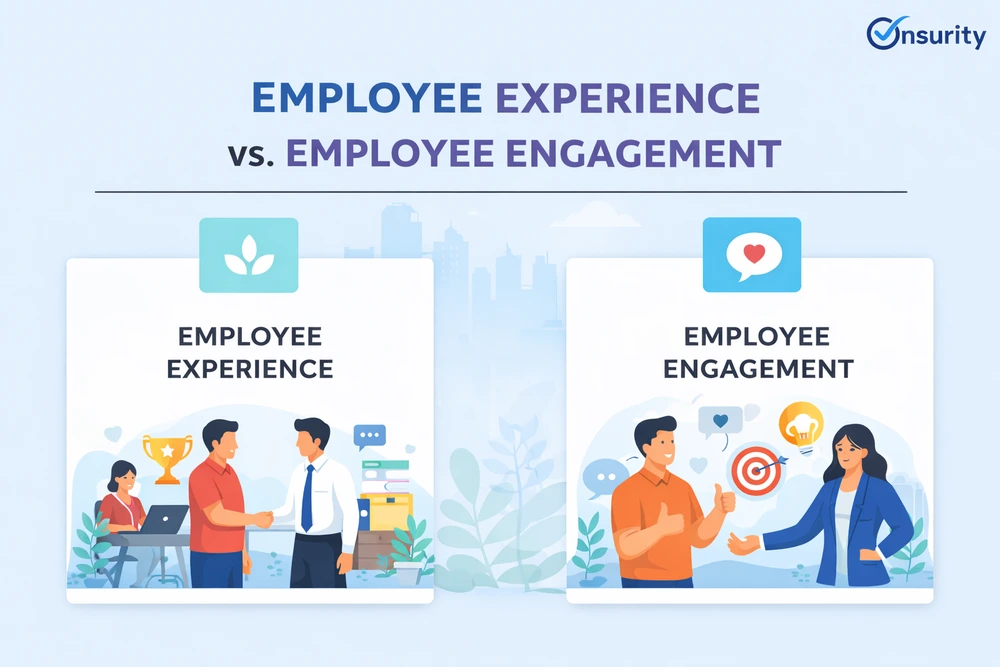
Employee experience includes everything an employee goes through during their journey, onboarding, performance reviews, policies, culture, benefits, team interactions, offboarding, and even how smoothly basic processes work. Employee engagement is how employees respond to those experiences, their level of involvement, commitment, and willingness to contribute. When experiences are clear, supportive, and employee-focused, engagement strengthens naturally. When they are fragmented or difficult to navigate, engagement becomes harder to sustain.
That is why organizations need to create frameworks keeping both employee experience and employee engagement in mind.
In this blog, we break down the key differences between employee experience and employee engagement, why both matter and how leaders can strengthen each other to build teams that feel supported, energized and ready to contribute their best.
What is Employee Experience
Employee experience includes the overall journey an employee has within an organization. From the day they hear about the job, to their onboarding, everyday moments and interactions, day-to-day workflows, performance conversations, recognition, growth opportunities, team relationships, wellbeing support, to offboarding, everything is a part of employee experience.
A strong employee experience comes from the understanding that people perform their best when they are consistently supported and when they experience care, clarity and respect on a daily basis, which builds their trust in the organization, allowing them to contribute long term and build deeper engagements.
Key Aspects of Employee Experience
1. Culture and Emotional Climate
Culture is what employees feel and experience every day at work. It reflects how people collaborate with each other, treat each other, and make decisions. When the environment feels supportive and respectful, employees feel they are in a safe space and ask for help without any hesitation. A healthy culture gives employees a sense of comfort and satisfaction instead of stress or uncertainty.
2. Processes and Policies
From getting on board to applying for leave, understanding how the appraisal cycle works, what it takes to get promoted, etc., employees have to deal with a lot of policies and processes. When these processes are designed in a simpler way, employees feel supported and know what to expect from the organization. But when these processes are not clear and inconsistent, they negatively impact how employees feel about the organization.
3. Technology and Tools
Technology has a very big influence on how smoothly people can get their work done. Having tools that are outdated and slow, makes everyday workflow complicated, which in turn creates frustration and drains energy. Employees start feeling tired even before the real work starts. But modern systems and technologies help employees navigate the everyday workflow smoothly without bothering about the clunky software or broken processes.
4. Benefits and Wellbeing Support
An employee gives their best output when they know that they are taken care of and supported. Providing them with health insurance, mental health support, preventive care, flexible policies and wellness initiatives can contribute to greater security.
5. Learning and Career Development
Employees stay at places where they have better growth opportunities. In fact, Linkedin Learning Report 2024 states that providing learning opportunities to employees is the number one retention strategy. When employees are provided with mentorship, skill development, and clearer career pathways, they deeply feel committed towards the organization.
6. Leadership and Manager Interactions
Managers shape a major part of employee experience. Gallup reports that an employee’s interaction with their manager is one of the most important factors across all stages of the employee journey, from attraction to departure. A supportive manager brings clarity, recognition, and guidance, which strengthens your employees’ trust.
7. Work Environment, Both Physical and Digital
The environment in which employees work influences their comfort and productivity. In an office, this includes ergonomic workspaces and collaborative areas. In remote setups, it includes clear communication channels and reliable collaboration tools. A supportive environment helps employees stay focused and feel connected.
Quick read: 10 Ways to Improve Work-Life Balance for Your Employees
What is Employee Engagement
Employee engagement is the energy and emotional commitment people bring to their work. It is that feeling when employees care about what they are doing, believe in the purpose behind it and genuinely want to contribute. It is very different from simply being “satisfied” with a job. Someone can be satisfied and still disconnected, but an engaged employee shows up with intention and pride. They think beyond their task list and look at how their work moves the company forward.
Employee Engagement is shaped in the present. It changes based on what employees experience every day. Recognition, the way managers communicate, whether growth feels possible, how teams treat each other, and even how the company behaves during difficult times, all influence how connected employees feel.
When engagement is high, you can see the difference immediately. People take initiative, collaborate more effectively, and deliver higher customer satisfaction. Many companies that score high on engagement often outperform their competitors because they have teams that care deeply about the outcome, not just the output.
Key Aspects of Employee Engagement
1. Emotional Commitment
Engaged employees feel a genuine connection to their work. They are not just completing tasks. They are invested. This emotional attachment makes them put in thought, effort, and care. They look for ways to improve things, support their peers, and take responsibility for results. When someone is emotionally committed, their work reflects it.
2. Effective Management
A large part of the engagement depends on the manager. Employees look to their managers more than anyone else for clarity, direction, trust and motivation. When managers communicate well, appreciate effort and guide people instead of policing them, engagement rises naturally. When they do not, even great employees start switching off.
3. Aligned Goals and Shared Purpose
People feel more engaged when they understand how their work fits into the bigger picture. When teams know the “why” behind their roles, everyday work feels meaningful rather than routine. They feel like they are part of something bigger, and that sense of purpose turns into pride and ownership.
4. Autonomy and Active Participation
Trust drives engagement. When employees are given space to make decisions, experiment and contribute ideas, they feel valued. They start treating the work as their own. Autonomy encourages creativity and brings out fresh thinking, even in routine tasks. It also signals that the organization believes in its people, which strengthens engagement even more.
Employee Experience vs. Employee Engagement: Key Differences
|
Aspect |
Employee Experience (EX) |
Employee Engagement (EE) |
|
Definition |
Everything an employee goes through at work, right from hiring to their last day. |
How emotionally connected and motivated an employee feels toward their work and the organization. |
|
Time Frame |
Long-term and shaped over the entire employee journey. |
Changes are often based on current feelings and interactions. |
|
Components |
Culture, workspace, tools, policies, benefits, and growth. |
Purpose, recognition, trust, manager’s behaviour, and teamwork. |
|
Purpose |
To create a supportive and smooth working environment. |
To inspire employees to give their best and stay committed. |
|
Focus |
What the organization provides. |
How the employee responds emotionally. |
|
Responsibility |
HR, leadership, managers, and the organization as a whole. |
Primarily influenced by managers and leadership behaviour. |
|
Ownership |
Mostly held by the organization. |
Shared, but shown through the employee’s mindset and actions. |
|
Measurement |
Feedback surveys, eNPS, onboarding, and exit inputs. |
Engagement surveys, pulse checks, performance, and participation. |
|
Outcome |
Better satisfaction, lower friction, and improved retention. |
Higher productivity, stronger commitment, and better performance. |
How Employee Experience and Employee Engagement Work Together
Employee experience and employee engagement are strongly connected. One shapes what people go through at work, and the other shapes how they feel because of those experiences. When the overall journey of an employee feels supportive, fair, and meaningful, their emotional investment in the work naturally grows. Likewise, when employees feel engaged, their daily experience becomes more positive because they participate more openly, connect better with colleagues, and take ownership of their responsibilities.
Think of engagement as the emotional spark and experience as the environment that protects and fuels that spark. Leadership behaviour, manager support, culture, the way people communicate, and even small moments of appreciation play a big part in how engaged someone feels.
On the other hand, the experience covers the entire arc of an employee’s time in the organization, from the first conversation during hiring to the last day. Everything from onboarding to everyday interactions, learning opportunities, well-being support and workplace tools shapes how an employee views the organization.
A recent McKinsey study found that employees who report a positive experience are up to sixteen times more engaged and eight times more likely to stay. This shows that engagement does not appear on its own. It grows out of the systems, behaviours and everyday moments that define the experience.
Recommended read: What is Employee Morale?
Why HR Must Prioritize Both Employee Experience and Engagement
Employee experience and employee engagement work closely together. Experience is about what employees go through at work every day. Engagement is about how they feel because of those experiences.
If the experience is confusing, stressful or unsupportive, even the best employees start losing interest. But if people do not feel connected to their work, improving their experience alone will not help much. HR teams need to focus on both so that employees not only stay but also enjoy their work and perform well.
Research supports this. Gallup found that teams with high engagement see better performance, stronger customer results and fewer days lost to absenteeism.
This happens because when people feel supported, respected, and given the tools they need, they naturally become more motivated. A good experience makes it easier to stay engaged, and higher engagement makes every day work feel more meaningful.
For HR and leaders, making both EX and EE a priority is essential in today’s workplace. Employees want clarity in their roles, managers who communicate well, flexibility, fair policies and opportunities to grow. When these needs are part of the employee experience, engagement becomes stronger and more consistent. This leads to better retention, higher productivity, and teams that handle change more effectively.
Organizations that invest in both experience and engagement create workplaces where people feel valued and want to contribute. This becomes a major advantage in attracting talent, retaining good employees, and building a healthy culture that lasts.
Also read: Top 10 Employee Engagement Activities in the Office
Role of Employee Benefits and Well-being in Shaping Employee Experience and Engagement
Modern employees expect organizations to support them not just at work, but as whole individuals. They want workplaces that care about their physical health and mental wellbeing, financial security, and overall quality of life.
This shift has become even stronger after the pandemic, where health and safety became top priorities for employees across industries. When companies take wellbeing seriously, employees feel valued, respected, and protected. This improves how they experience the workplace and strengthens their emotional connection to the company.
Employee benefits play a major role in shaping both experience and engagement. Healthcare, preventive care, mental wellness support, and fitness initiatives are no longer seen as optional perks. They directly influence how employees feel on a daily basis. Group Health Insurance builds a sense of security.
Preventive care programs help employees stay healthy instead of reacting to illnesses later. Fitness memberships and wellness sessions help reduce stress and improve productivity. When these benefits are accessible and easy to use, employees are more confident, less distracted, and more present in their work. A healthy workforce is not just happier. It is more focused, loyal, and high performing.
This is where Onsurity supports HR teams in a powerful way. Onsurity offers comprehensive health and wellness plans that make it simple for companies of all sizes to provide meaningful benefits. Organizations can offer group health insurance, discounted health checkups, access to quality doctors, digital consultations, mental wellness support, fitness tracking, and preventive care programs through a single platform.
Employees can use the Onsurity app to track their fitness, attend health webinars, access member benefits, and manage their healthcare easily. For employers, these benefits send a clear message that the company cares about its people at every stage.
Basic health coverage is now the minimum expectation. Companies that want to stay competitive must offer holistic well-being support that covers physical, mental, and preventive care. While these programs require investment, they deliver strong long-term ROI through better retention, lower absenteeism, and improved engagement.
Onsurity makes this transition easier by offering flexible, scalable plans that HR teams can customize based on their workforce needs. By choosing solutions like Onsurity, organizations build stronger employee experience and create a more engaged, healthier and motivated workforce.
How to Improve Employee Experience and Engagement
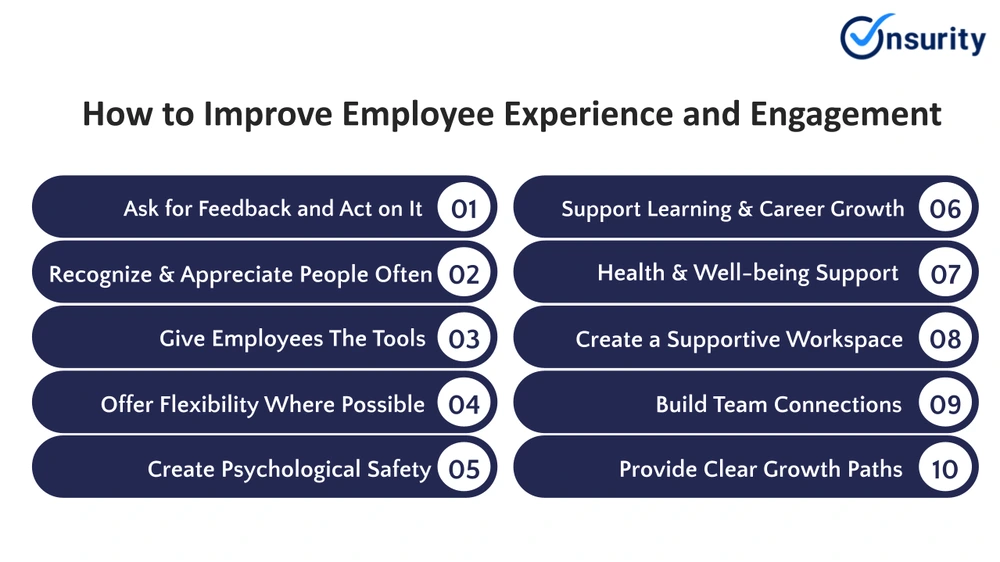
Improving employee experience and engagement works best when organizations focus on what employees need to feel supported, motivated, and able to do their jobs well. These strategies strengthen both areas together because a good experience helps employees stay engaged, and strong engagement makes the experience feel even better.
1. Ask For Feedback and Act on It
Regular check-ins, surveys, and one-on-one sessions help you understand what your employees are struggling with. The real impact comes from acting on feedback. Even small improvements in onboarding, role clarity, or workflow can immediately lift both confidence and engagement.
2. Recognize and Appreciate People Often
A simple thank you or a public shoutout goes a long way. When employees feel noticed, they feel connected. Recognition builds trust and motivates people to put in their best effort.
3. Give Employees The Tools They Need to Succeed
Modern, easy-to-use tools reduce stress and help employees work more efficiently. When people feel equipped and supported, both their experience and engagement improve.
4. Offer Flexibility Where Possible
Different employees need different kinds of balance. Flexibility in schedules, remote options, or extra time off helps people manage life better. When employees feel trusted to work in a way that suits them, engagement rises naturally.
5. Create Psychological Safety
Employees must feel comfortable speaking up, asking questions and sharing ideas. A supportive manager and an open environment make employees more confident and involved.
6. Support Learning and Career Growth
When employees see a future with the organization, they show more commitment. Offering training, upskilling options, and regular career conversations helps people grow and stay engaged.
7. Strengthen Health and Well-being Support
Well-being affects how employees show up to work. Regular health checkups, mental wellness resources, access to doctors, and fitness options make employees feel cared for. This improves both their daily experience and motivation.
This is an area where Onsurity adds real value. Onsurity’s health and wellness plans allow companies to offer care to their employees from day one. Through one simple app, employees can access preventive care, mental wellness support, free tele consultations with experienced doctors, discounted lab tests and medicines, fitness programs, wellness sessions, and expert-led webinars, making it easier to stay on top of their health. When employees feel secure and supported in their wellbeing, they are more confident, focused, and engaged at work.
8. Create a Supportive Physical or Hybrid Workspace
Whether employees work from the office or remotely, they need environments that help them focus, collaborate, and recharge. Even small upgrades to their workspace or tools can make every day work feel easier and more productive.
9. Build Team Connections
Strong workplace relationships improve both employee experience and engagement. Team building, shared celebrations, and social interactions create a sense of belonging and connection.
10. Provide Clear Growth Paths
Employees want clarity on how they can progress. Transparent expectations and regular development discussions help employees feel motivated and committed.
Related read: Employee Benefits for Small Business
How To Measure Employee Experience and Employee Engagement Success
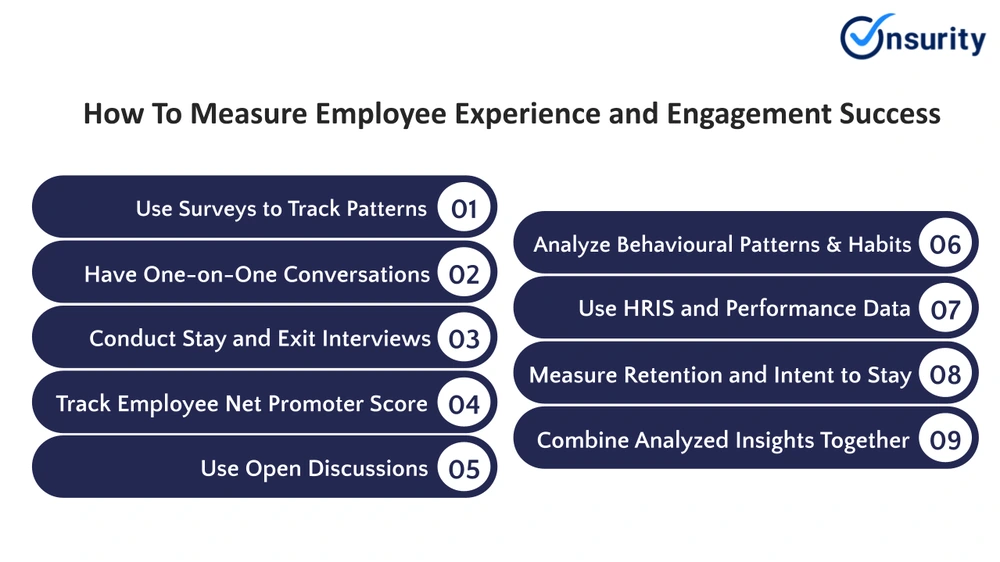
Measuring EX and EE helps leaders understand how employees feel, how well the workplace is supporting them, and where improvements are needed. A good measurement system combines numbers, conversations and real behaviour, giving a full picture of both the experience employees go through and the level of energy and commitment they bring to work.
1. Use Surveys to Track Sentiment and Patterns
Engagement surveys and experience surveys help organizations understand overall mood, motivation, and workplace satisfaction. Annual surveys offer a broad view of culture, leadership, communication, recognition, and team dynamics. Pulse surveys provide quicker insights and help spot issues early, whether it is workload pressure, unclear priorities or morale dips. New hire surveys and onboarding feedback help identify gaps in early experience, which often affect long-term engagement.
2. Have Regular One-on-One Conversations
Manager check-ins are one of the strongest indicators of how engaged employees feel. These conversations help employees share challenges, clarify expectations, and express concerns they may not mention in a survey. Leaders also get real-time insights into motivation, workload balance, growth expectations and overall well-being, which all influence both EX and EE.
3. Conduct Stay and Exit Interviews
Stay interviews help you understand what keeps employees committed and what might cause them to leave in the future. Exit interviews reveal patterns behind turnover and highlight gaps in experience that need fixing, such as unclear roles, poor management support, or lack of growth. When analyzed together, they offer powerful insights into the real employee journey.
4. Track eNPS (Employee Net Promoter Score)
eNPS gives a simple view into overall sentiment by asking whether employees would recommend the organization as a great place to work. A rising score indicates a healthier experience, strong trust, and deeper engagement. A declining score highlights areas where the culture or processes may need attention.
5. Use Focus Groups and Open Discussions
Group discussions help HR understand what employees are really feeling and thinking. These sessions reveal emotional drivers, frustrations, and expectations that data alone cannot explain. They are especially useful when trying to understand low survey scores or sudden drops in team morale.
6. Analyze Behavioural Patterns and Work Habits
Engagement often shows up in how employees participate. You can track patterns such as attendance, initiative in projects, training participation, contribution levels, and collaboration. These behaviours give a practical view of how connected and supported employees feel at work.
7. Use HRIS and Performance Data
Absenteeism, internal mobility, performance ratings, and productivity trends reveal whether employees feel supported and are able to do their best work. Consistency and stability in these metrics usually indicate a strong experience. Drops or fluctuations can signal gaps in workload management, well-being, or manager support.
8. Measure Retention, Referrals and Intent to Stay
Retention is one of the clearest indicators of a positive experience. High early turnover often signals problems in onboarding or manager support. Referrals show how confident employees feel recommending the organization to others. Intent-to-stay responses give early warnings about future attrition risks.
9. Combine Quantitative and Qualitative Insights
Surveys provide numbers. Conversations provide context. Behavioural data reveals actual habits. When all three are analyzed together, HR teams get a clear picture of both the environment employees are working in and how engaged they feel within it. This helps leaders take meaningful, targeted action instead of reactive or superficial fixes.
Suggested read: Top 15 Employee Retention Strategies
Conclusion
Employee experience and employee engagement work best when they support each other. A strong experience gives employees the clarity, comfort and support they need in their everyday work. Engagement brings in the energy, ownership and motivation that drive performance. When organizations focus on both, they build teams that stay longer, collaborate better, and contribute with more confidence.
The takeaway is clear. Employee experience builds the environment. Employee engagement fuels the action. Together, they create a workplace where people feel valued and are able to do their best work. For any organization preparing for the future, these two pillars are essential for attracting talent, reducing turnover, and maintaining a healthy, productive culture.
At Onsurity, we empower businesses to elevate both engagement and experience through flexible employee health and wellness solutions. By making preventive care, mental wellness support, and access to doctors and wellness programs easy and accessible, Onsurity helps employees feel genuinely cared for from day one. When well-being becomes part of everyday work life, engagement grows more naturally and organizations build healthier, more resilient teams.
FAQs
1. What is the primary difference between Employee Experience and Employee Engagement?
2. What are examples of employee experience?
3. What are examples of employee engagement?
4. How does improving employee experience lead to increased employee engagement?
5. How are employee experience and employee engagement typically measured?
6. Can an employee have good employee experience but low engagement?

Senior Executive – Content
Payal specializes in the healthcare, wellness, and insurtech space, with a strong focus on educating businesses about insurance and employee wellbeing. She is passionate about simplifying an industry that is often misunderstood and filled with complex jargon, translating it into clear and practical insights that organizations can easily understand and act on. Through her work, she aims to make the insurance ecosystem more transparent and accessible, helping businesses recognize that prioritizing employee wellbeing is not just a benefit but a responsibility.