 Payal Agarwal
 February 11, 2026
 9 min read
 327
327Table of Contents
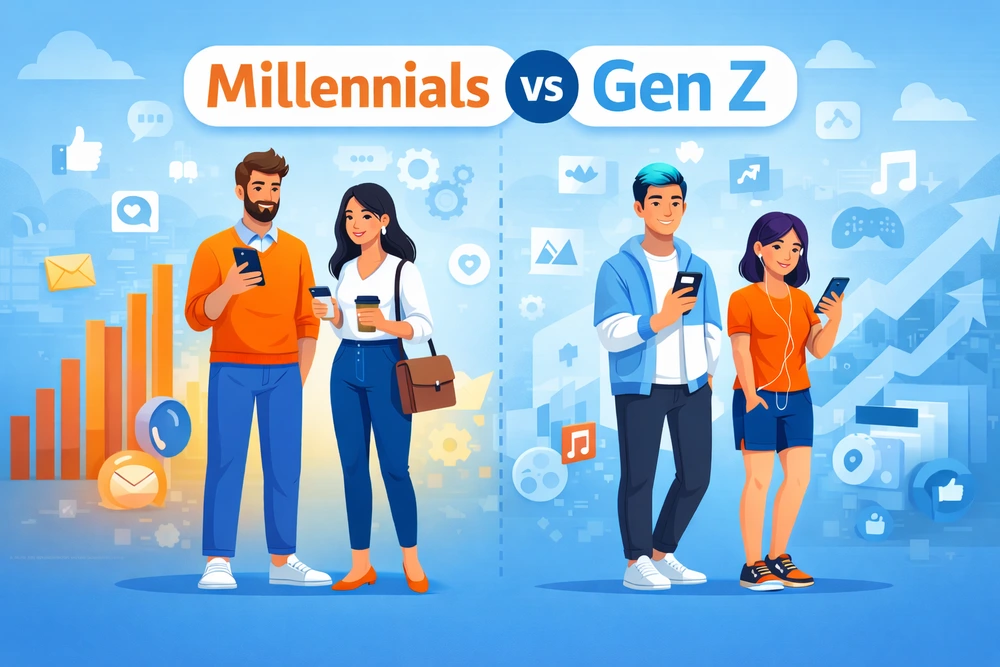
You are likely losing your best talent because you are using a Millennial roadmap to navigate a Gen Z world. It is now 2026, and we are in a high-stakes “Retention Crisis” where nearly 46% of Gen Z employees often plan to quit their jobs, even without a backup plan, if the work doesn’t align with their personal values. Meanwhile, Millennials are facing record-high burnout as they struggle to balance traditional corporate hierarchies with the demands of the new age.
If you want to keep your top performers, you have to stop treating these two generations as a uniform block. You are managing two distinct eras of professional evolution. To retain them, you have to understand that while one is fighting for a seat at the table, the other is wondering why the table even exists. If you don’t bridge that gap today, you aren’t just losing people. You’re losing the future of the company.
In this blog, we break down the critical differences between these two generations and offer a research-backed blueprint to help you lead them effectively.
Millennials and Gen Z Overview
To lead effectively in 2026, you must decode the specific drivers behind these two groups. Their professional identities are shaped by the distinct global eras they inherited.
Characteristics of Millennials
Born between 1981 and 1996, Millennials are the generation that navigated the shift from old-school business culture to the digital age. Now that they are in senior management, they see work as a team effort where feedback and a sense of purpose are vital. Since many of them are raising children while also caring for their parents, they prioritize flexibility and having control over their own schedules.
Characteristics of Gen Z
Born between 1997 and 2012, Gen Z are true Digital Natives who entered the workforce during a period of intense volatility and AI disruption. This has made them radically pragmatic; they value job security, financial stability, and independent task ownership over corporate idealism. While they are tech-dependent, they have a high “BS detector” and demand radical transparency and authentic, face-to-face human connection from their leaders to build real trust.
Also read: How CHROs Can Guide Gen Z to Align Careers with Ikigai
Millennials vs Gen Z: Key Differences in the Workplace
While both generations are digital natives, the environments that shaped their first steps into the professional world created two distinct sets of priorities.
1. Work Attitude
You’ll find that Gen Z values job security and stability above almost everything else. This might seem surprising for a “job-hopping” generation, but their early exposure to economic crashes makes them crave a safety net. Millennials, now reaching mid-management, are often more open to career experimentation. They’ve spent a decade in the system and are now looking for roles that offer the most personal fulfillment or “pivoting” opportunities.
2. Working Preference
Gen Z prefers focused, independent work. They grew up with individual screens and often find constant interruptions distracting. Millennials, however, thrive on collaboration. They were raised in the era of “group projects” and generally enjoy brainstorming sessions and team-based problem-solving.
3. Communication Style
This is the most surprising pivot: Gen Z values face-to-face conversations. After being raised on screens and isolated by pandemic schooling, they crave authentic, human interaction to build trust. Millennials are more comfortable with emails, chats, and virtual tools. To a Millennial, an in-person meeting that could have been a DM is a waste of time; to a Gen Z worker, that DM can feel cold and impersonal.
4. Professionalism
For many Millennials, professionalism is about being on time and respecting the company’s structure. These are the marks of a reliable teammate. Gen Z sees it differently. They focus on whether a person is honest and takes responsibility for their work. They don’t care much about dress codes or job titles; they just want to work with people who are genuine. For them, being real is far more important than following traditional office rules.
5. Motivation
Millennials are usually looking for roles where they can keep learning and have the freedom to work from wherever they choose. Gen Z is driven more by a sense of purpose. They want to know their work has a positive impact on the world. They need to see a company actually living its values every single day. If a mission statement is just words on a website, they will quickly leave to find a workplace that is truly committed to doing what is right.
6. Age Range
- Millennials: Roughly 30 to 45 years old (managers and directors).
- Gen Z: Roughly 14 to 29 years old (Your rising stars and entry-level talent).
Suggested read: 12 Ways to Keep Employees Happy and Productive
Workplace Motivations for Millennials and Gen Z
Both generations seek more than just a salary, but their priorities differ. Millennials value flexibility and work-life balance, especially as they juggle peak career years with family responsibilities, while Gen Z is navigating a much more volatile landscape. According to the Randstad 2025 Gen Z Report, they have entered the workforce at a time of immense change, balancing ambition and skill with the weight of technological disruption and economic uncertainty.
In this era of talent scarcity, you cannot retain them with a paycheck alone. You must bridge this uncertainty by fostering a culture of genuine care and treating them as people first and employees second. When you prioritize their wellbeing and career growth, you provide the stability they lack elsewhere, turning a generation of “flight risks” into your most loyal assets.
Which Generation Is Happier at Work and Which Is More Likely to Quit?
Workplace satisfaction is currently tied to career stage, and younger employees are notably more restless than those who have been in the workforce longer. Research shows that 42% of millennials report being happy at work, compared to only 35% of Gen Z.
This gap is largely due to the career stability Millennials have found in senior roles. Gen Z, by contrast, is dealing with the financial stress of entry-level positions and concerns about how AI will affect their future job security.
Top 5 Ways to Engage and Retain Millennial and Gen Z Employees
1. Maintain Core Values and Culture
A company’s culture isn’t found in a mission statement. It’s actually defined by how leadership acts every day. For Millennials and Gen Z, integrity is the biggest factor in their loyalty to a firm. If they see managers ignoring the very policies the company claims to value, they stop taking those leaders seriously and engagement drops right away.
To keep your best people, you have to move past corporate slogans. Your values need to be something employees actually see and feel in their daily work. Relying on consistent ethics to build a high-trust environment is the only way to get a long-term commitment from this workforce.
2. Redesign Communication
Communication is about building a relationship with your team, not just passing along information. Digital tools are great for managing daily tasks, but they work best when you also make time for 1-on-1 conversations. Providing clear updates and staying available helps the team work together and ensures people feel their input is valued.
This is particularly important for Gen Z. They want honest dialogue and need to see that their perspectives are taken seriously.
3. Provide Work Flexibility
For Millennials and Gen Z, flexibility is the most important factor in a career. Whether you offer hybrid models, flexible hours, or “work from anywhere” weeks, it is consistently the top benefit people ask for. Making this shift shows that you value actual results rather than constant oversight, which provides the autonomy that prevents these generations from walking away.
Giving people the freedom to work when they are most productive leads to better output and builds genuine loyalty. To manage this without the friction of constant check-ins, use modern HR tools to stay aligned on communication and goals.
4. Promote Continuous Learning
Skill development often builds confidence, and as both generations are worried about AI displacement so offer them learning formats that allow them to grow at their own pace. Use surveys to identify their learning needs and provide clear paths for advancement. This investment proves that you value their future.
5. Health and Wellness Benefits
This is where you show “employer care.” A standard insurance policy isn’t enough anymore. You need to offer:
- Mental Health Support: Counseling and stress management are top priorities for Gen Z.
- Comprehensive Coverage: Health check-ups and wellness programs that cover the employee’s holistic life.
- Preventive Care: Focus on keeping them healthy, not just fixing them when they’re burnt out.
Also read: Mental Health at Workplace
Conclusion
Millennials and Gen Z make up the future of the global workforce. They bring new expectations around flexibility, purpose, and well-being that can’t be ignored. Both generations are tech-savvy and emotionally aware, and they are looking for workplaces that support their growth while respecting their boundaries.
The traditional, one-size-fits-all policies of the past no longer work. Organizations that invest in flexible benefits, mental health support, and intuitive HR tools will be the ones to win the talent war. Platforms like Onsurity help businesses support this modern workforce by providing flexible coverage that includes free 24/7 doctor teleconsultations, mental health workshops, and discounted gym memberships.
By offering proactive solutions like preventive care checkups and medicine delivery alongside core insurance, you directly address the uncertainty felt by younger talent. Fostering this culture of genuine care ensures you build a team that doesn’t just stay but thrives.
FAQs
1. What is the difference between Millennials and Gen Z in the workplace?
Millennials focus on collaboration and finding a “dream career” with meaning, while Gen Z prioritizes job security and independent task ownership to future-proof themselves against market volatility.
2. What are the key age ranges for Millennials and Gen Z?
In 2026, Millennials are currently aged 30 to 45 (born 1981–1996), while Gen Z members are between 14 and 29 (born 1997–2012).
3. Who is better, Gen Z or Millennial?
Both generations are at their best when their unique strengths are utilized, as they bring essential and complementary skills to a team. Millennials provide seasoned leadership, institutional knowledge, and collaborative experience. Gen Z offers high technical agility and a fresh perspective on digital trends and social responsibility. A successful workplace leverages the strengths of both to create a more balanced and innovative environment.
4. How do Millennial and Gen Z approaches to work-life balance differ?
Millennials typically prioritize flexibility to integrate their professional lives with family and caregiving responsibilities. Gen Z tends to demand much stricter boundaries between work and life. They look for proactive mental health support and “right to disconnect” cultures to prevent burnout before it starts.
5. How can organizations effectively manage and integrate both Millennials and Gen Z?
The goal is to build a culture where experience and fresh perspectives actually complement each other. You can do this by setting up reverse mentorships where Millennials lead on strategy while Gen Z provides input on process efficiency and new tools. It also helps to shift the focus toward results. Both groups prefer being judged on their output rather than on how many hours they spend at a desk. When you prioritize clear goals and make it safe for everyone to speak up, generational gaps stop being a hurdle and start driving better results.

Senior Executive – Content
Payal specializes in the healthcare, wellness, and insurtech space, with a strong focus on educating businesses about insurance and employee wellbeing. She is passionate about simplifying an industry that is often misunderstood and filled with complex jargon, translating it into clear and practical insights that organizations can easily understand and act on. Through her work, she aims to make the insurance ecosystem more transparent and accessible, helping businesses recognize that prioritizing employee wellbeing is not just a benefit but a responsibility.