 Payal Agarwal
 March 23, 2026
 5 min read
 2109
2109Table of Contents
The importance of health insurance has grown since the Covid-19 pandemic. If you are an employer or run your own company, choosing the right group health insurance for your employees is a crucial decision. It directly impacts employee wellbeing, retention, and your company’s financial exposure.
10 Questions to Ask Your Group Health Insurance Providers
1. What is a Group Health Insurance Plan?
Group health insurance provides health coverage to a defined group, most commonly employees of an organization, under a single master policy purchased by the employer. It typically covers medical expenses such as diagnostics, hospitalization, surgery and medicines.
Because the risk is pooled across many members, group premiums are often more affordable per person than individual health insurance plans. Group policies may also include add-ons such as group term life insurance or personal accident cover.
2. How Many Employees Are Required to Buy a Group Health Insurance Plan?
The minimum group size varies by insurer and product. Insurance companies define eligibility criteria in their product documents, and in practice some group policies start at around 7 to 10 employees, while traditional corporate plans may require larger groups.
In addition, newer membership and employee-benefit platforms allow very small teams to access group-style health benefits. In such models, companies with as few as three employees can offer structured health coverage to their workforce. Employers should always verify eligibility requirements for the specific plan they are considering.
3. What Should a Group Health Insurance Plan Cover?
Before selecting a plan, it is important to understand your employees’ needs. Conducting a short survey can help identify age distribution, dependent requirements and common healthcare concerns.
When evaluating coverage, consider hospitalization benefits, day-care procedures, diagnostic expenses, pre- and post-hospitalization cover, and medicine limits. Also assess whether the plan includes family members, senior citizens, maternity benefits, mental health support, teleconsultations and preventive health check-ups.
Medical inflation should be factored into coverage decisions, as healthcare costs in India have seen sustained double-digit growth in recent years. Balancing employee needs with premium affordability will help you choose the most suitable plan.
4. How Can You Buy a Group Health Insurance Plan for Your Employees?
Employers can purchase group health insurance directly from insurers or through intermediaries and employee-benefit platforms. For small and growing teams, intermediaries often simplify onboarding, documentation, billing and claims support.
Once suitable plans are shortlisted, employers should compare benefits, exclusions, network hospitals and pricing before completing the proposal process. After policy issuance, educating employees on how to use their insurance benefits ensures better utilization and fewer claim-related issues.
5. What Are Cashless Network Hospitals?
Network hospitals are healthcare facilities that have agreements with insurance companies or TPAs to provide cashless treatment to insured members. When employees seek treatment at a network hospital for a covered procedure, the insurer or TPA settles eligible expenses directly with the hospital.
The list of network hospitals is usually published on the insurer’s or TPA’s website. Cashless benefits apply only to treatments covered under the policy and are subject to approval and policy terms. Expenses not covered under the policy may still need to be paid by the patient.
Also read: Wellness Benefits in Group Health Insurance
6. What Are Cashless Claims?
A cashless claim allows an insured employee to receive treatment at a network hospital without paying the full hospital bill upfront. The hospital requests pre-authorization from the insurer or TPA, after which eligible expenses are settled directly.
Approval timelines vary based on the hospital, insurer, TPA and treatment complexity. While cashless claims are generally faster and less stressful than reimbursement claims, employees should understand the approval process and documentation requirements in advance.
7. What Is the Right Amount of Sum Insured for Employees?
The sum insured is the maximum amount payable by the insurer in a policy year. Choosing the right amount depends on employee age profile, location, hospital preferences and whether dependents are covered.
As a starting point, many employers in metro or tier-1 cities consider a minimum of INR 3 lakh per employee for individual cover. When family members are included, a sum insured of INR 5 lakh or more is often considered. However, these figures are indicative and employers should run premium comparisons and scenario analyses before finalizing coverage.
8. Does a Group Health Insurance Plan Cover Employees’ Families?
Some group health insurance plans offer optional coverage for employees’ dependents such as spouses, children and in certain cases parents. Family coverage is typically priced separately and may have age limits.
Senior citizens are not always included in standard group plans. If parental coverage is required, employers should either select a plan that explicitly includes senior citizens or guide employees toward separate health insurance policies for parents.
9. Can You Pay Monthly Premiums for Group Health Insurance Plans?
Traditional group health insurance policies are usually priced and renewed annually. However, newer employee-benefit platforms offer monthly subscription-based billing, where employers pay only for active employees each month.
This model is particularly useful for small and medium businesses with high attrition or fluctuating headcounts. Employers should confirm how mid-month additions and exits are handled and whether coverage terms remain consistent throughout the year.
10. Is Health Insurance Enough When Offering Healthcare Benefits to Employees?
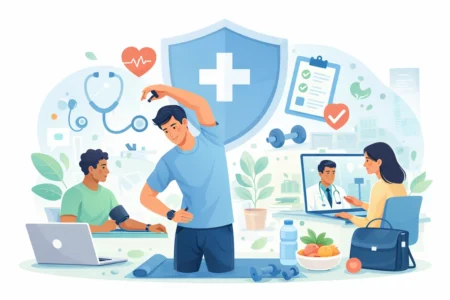
Hospitalization insurance alone is no longer sufficient for many employees. Today’s workforce values preventive and holistic healthcare benefits such as teleconsultations, mental health support, fitness programs and regular health screenings.
Employers who combine insurance with wellness benefits often see improved employee engagement, reduced absenteeism and stronger retention. Offering comprehensive healthcare support helps organizations build a healthier and more productive workforce.
With Onsurity’s comprehensive health and wellness plans, you can not only meet your team’s health insurance needs but also gain access to a broad range of health and wellness benefits.
FAQs
1. Are pre-existing diseases covered in Group Health Insurance?
Usually, yes. One of the biggest advantages of GHI is that most plans cover pre-existing diseases from Day 1, unlike individual plans which have a 2–4 year waiting period.
2. What happens to the insurance if an employee leaves the company?
The coverage typically ends on the employee’s last working day. However, some insurers allow employees to “convert” their group cover into an individual policy without losing the waiting period benefits.
3. Is the premium paid by the employer tax-deductible?
Yes, the premium paid by an employer for employee group health insurance is generally treated as a business expense, which can provide tax benefits under the Income Tax Act.
4. Can employees top-up their coverage on their own?
Many modern GHI plans allow “Voluntary Top-ups,” where employees can pay an extra amount to increase their sum insured while still benefiting from the corporate group rates.
5. What is a TPA (Third-Party Administrator)?
A TPA is an entity that processes insurance claims and provides network hospital services on behalf of the insurance company. They are your primary point of contact during a hospitalization.

Senior Executive – Content
Payal specializes in the healthcare, wellness, and insurtech space, with a strong focus on educating businesses about insurance and employee wellbeing. She is passionate about simplifying an industry that is often misunderstood and filled with complex jargon, translating it into clear and practical insights that organizations can easily understand and act on. Through her work, she aims to make the insurance ecosystem more transparent and accessible, helping businesses recognize that prioritizing employee wellbeing is not just a benefit but a responsibility.