 Payal Agarwal
 January 19, 2026
 8 min read
 283
283Table of Contents
Gone are the days when timely salaries and basic insurance perks were enough for employees. Today, these benefits are just the bare minimum. If that is all you offer your team, you are not standing out. You are barely keeping up. The shift is already visible across the industry.
According to a 2026 report by Great Place To Work India, a staggering 66% of employees are willing to take a pay cut for a better work-life balance and better benefits. Even in high-paying startup roles, money alone is no longer enough to make people stay. People are clearly choosing their well-being over a slightly higher bank balance.
What really keeps employees around is more personal than pay. It is about whether work fits into their life instead of taking it over. It is whether they feel supported when they are stressed, overwhelmed, or dealing with things outside office hours. People stay when they feel their company sees them as humans first and employees second.
That is why lifestyle benefits matter. They aren’t just flashy perks, but everyday support systems that shape how people feel about where they work. When employees feel supported in their lives, they do not just work better. They stay longer.
Also read: Top 15 Employee Retention Strategies
What Are Lifestyle Benefits?
Lifestyle benefits are the extra perks that help employees handle life outside of work. They go beyond standard medical or retirement plans to include things like wellness programs, flexible hours, and mental health support. This could be anything from gym memberships to childcare help or home-office stipends.
The idea is to offer something that actually fits an employee’s specific needs. For example, a parent might value childcare assistance, while a younger employee might prioritize mental wellness and flexibility. To be effective, benefits should support the whole person by looking after their physical, emotional, and professional well-being.
Why Lifestyle Benefits Are Critical for Employee Retention
1. Addressing Burnout to Reduce Turnover
We are living through a burnout epidemic, and it is hitting Indian corporate circles hard. Studies indicate that India’s corporate burnout rate stands at a staggering 78%, which is significantly higher than global averages.
When your star developer suddenly stops replying to Slack messages or your sales lead starts missing targets, it’s rarely because they became lazy overnight. It’s usually burnout. Wellness-focused lifestyle benefits act as a pressure release valve. By offering perks like mandatory downtime or access to therapy, you tackle the stress before it turns into a resignation letter. You are protecting your retention rates by investing in their mental bandwidth.
2. Attracting Gen Z and Millennial Talent
If your office is full of Gen Z and Millennials, you need to know that their priority list looks very different from previous generations. For them, “quality of life” isn’t a buzzword; it’s a non-negotiable.
Recent surveys reveal that 47% of Gen Z professionals in India prioritize work-life balance and meaningful work over just a higher salary or a fancy job title. They are willing to walk away from a toxic grind even if it pays well. To keep them, you need to speak their language, which means offering benefits that signal freedom, growth, and genuine care.
Quick read: 12 Ways to Keep Your Employees Happy and Productive
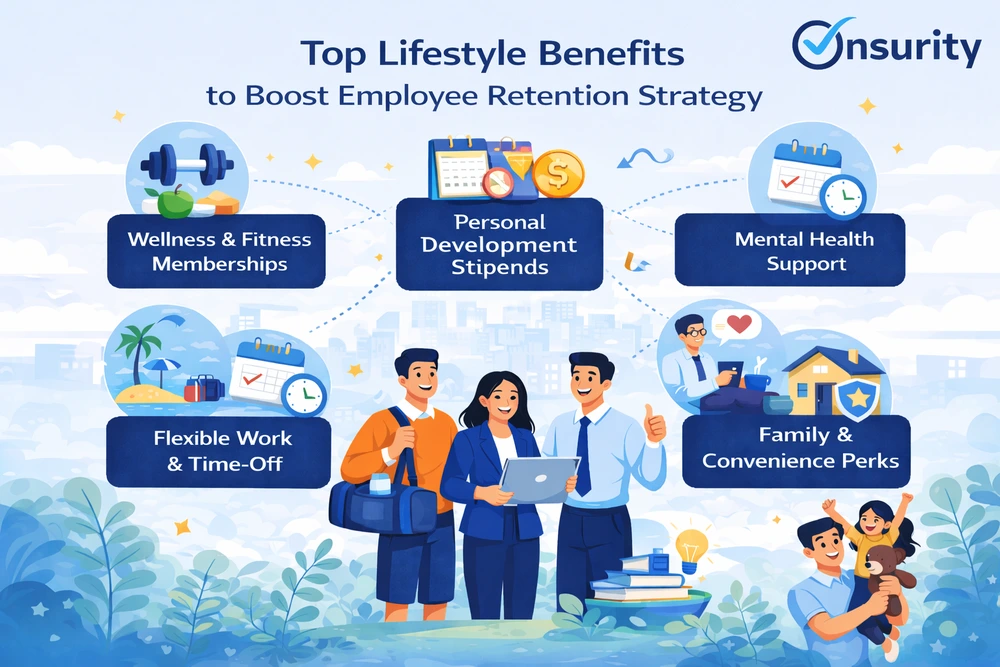
Top 5 Lifestyle Benefits to Boost Your Retention Strategy
1. Wellness & Fitness Memberships
Give your team access to gym memberships, yoga classes, fitness apps, or nutrition counseling. These perks are directly linked to lower stress and result in fewer sick days. By helping your employees stay active, you show that their health is a genuine priority. It is a simple, effective way to fight burnout and keep your best talent for the long term.
2. Flexible Work & Time-Off
Giving employees freedom over their time is one of the best ways to keep teams happy. Between hybrid setups and flexible hours, letting people manage their own schedules takes a lot of stress away. It helps everyone balance their personal lives without the constant pressure of a strict nine-to-five. For startups, even simple things like unlimited leave or home-office stipends go a long way in building real loyalty.
3. Mental Health Support
In high-pressure jobs, mental health support is no longer a luxury; it’s a necessity. When employees are stressed, they are far more likely to check out, but offering resources like virtual therapy, meditation apps, or “no-meeting Fridays” can help keep teams together. This matters a lot to younger generations.
A Recent survey shows that most Gen Z and Millennial workers will stay at a job much longer if their mental health is supported. By offering counseling or recharge days, companies prove that their team’s well-being is a priority. This doesn’t just protect the employees; it keeps the whole company’s momentum going.
4. Personal Development Stipends
Helping cover the cost of a new certification or even a side hobby shows your employees that they are valued as a whole person. Setting aside a yearly budget for learning sends a clear signal that their future matters just as much as the work they do today. It makes a big difference when people feel like their personal growth is actually a priority for their employer.
5. Family & Convenience Perks
The average working age in India today is between 25 and 45. This makes up the largest group of the working generation, and these are the people currently balancing the pressure of becoming new parents or looking after their aging parents.
This is exactly where offering real-time support for their families becomes so valuable. Whether it is help with childcare, eldercare resources, or just general convenience perks, providing this kind of help builds much deeper loyalty. Employees are more likely to stay when they feel their employers truly understand and support the personal responsibilities they handle every single day.
Also read: 14 Best Employee Perks to Attract and Retain Top Talent
Steps to Implement Lifestyle Benefits on a Startup Budget
Step 1: Survey Your Team
It is always safer to ask than to guess. You might end up spending money on gym memberships when your team actually wants mental health access or better health coverage.
Run a simple survey. Keep it practical. Ask trade-off questions like, “Would you prefer a ₹2,000 learning allowance or a ₹2,000 wellness allowance?”
This way, you spend only on the benefits your employees actually value and use. It keeps adoption high and ensures every rupee delivers real impact.
Step 2: Offer an OPD Wallet for Everyday Care
A great way to provide flexibility is through an OPD wallet. This is a fixed budget you give to each employee to cover outpatient medical expenses that don’t require staying in a hospital. Companies can simply add a balance to these wallets, and employees can use it for doctor consultations, lab tests, or medicines.
This approach keeps your costs predictable while giving people the freedom to handle their own health needs. Whether it is a routine checkup or a sudden fever, having that balance ready comes in handy during emergencies and makes a small budget feel much more meaningful.
Step 3: Leverage Tech Platforms
Getting enterprise-level rates can be tough for smaller teams. That is where tech providers become extremely useful. Platforms like Onsurity bring together a plethora of healthcare services. This allows even a five-person startup to access the same premium wellness benefits and health plan rates as a five-thousand-person corporate, effectively levelling the playing field.
Suggested read: Top 10 Monetary and Non-Monetary Benefits
How Onsurity Integrates Lifestyle Benefits with Healthcare
Onsurity’s health and wellness memberships is designed as an all-in-one retention tool. Beyond basic insurance, Onsurity includes lifestyle-oriented services. Every member gets doctor teleconsultations (up to five free), discounted preventive check-ups, and discounts on medicines.
Fitness and wellness are part of the package too: Onsurity offers subsidized gym/fitness program memberships and health tracking. In practice, your team can use the Onsurity app to book a doctor, book lab tests, or access coverage for their dependents at reduced rates.
By bundling these with group health cover, Onsurity lets you “plug in” lifestyle benefits immediately. In other words, you get a ready-made platform that delivers many perks at once: free doctor consultations, wellness memberships, family coverage options, etc. This makes it easy for startups to modernize benefits without reinventing the wheel.
Conclusion
To win the war for talent, companies must upgrade their benefits beyond the paycheck. Employees want holistic support, not just free lunch or insurance, but flexible schedules, wellness options, personal growth, and family aid. Putting meaningful lifestyle benefits in place is not an expense but a strategic investment in retention and culture. Happier, healthier employees will work harder for you and stick around longer.
Ready to modernize your employee benefits? Explore Onsurity’s comprehensive healthcare memberships today and start building a benefits plan that truly keeps your people.
FAQs
1. How do lifestyle benefits differ from traditional ones?
2. Can these perks actually help keep people from leaving?
3. What’s the best way for a startup to offer these on a budget?
4. Are these perks taxable for employees in India?

Senior Executive – Content
Payal specializes in the healthcare, wellness, and insurtech space, with a strong focus on educating businesses about insurance and employee wellbeing. She is passionate about simplifying an industry that is often misunderstood and filled with complex jargon, translating it into clear and practical insights that organizations can easily understand and act on. Through her work, she aims to make the insurance ecosystem more transparent and accessible, helping businesses recognize that prioritizing employee wellbeing is not just a benefit but a responsibility.