 Payal Agarwal
 June 4, 2026
 11 min read
 240
240Table of Contents
The war for top talent has never been more intense. Today, early-stage startups are constantly going head-to-head with massive MNCs to hire the best engineers, builders, and product thinkers. While an early-stage startup might not always outbid a giant corporation on salary, there is a very clear way to win this talent race: by showing that you truly care about your people.
That shift in mindset is very real. Candidates are looking at the bigger picture now, with a recent report showing that 74% of employees actually value long-term benefits over a larger paycheck. The best people aren’t just looking at the take-home figure anymore. They want to know they and their families are protected. Offering a group health plan is the easiest way to prove you are looking out for them, which gives you a major advantage when trying to bring them on board.
Below, we will look at how to choose the right policy for your team, what it will actually cost you, and the best startup-friendly options on the Indian market right now.
Also read: How to Choose the Right Group Health Insurance for Your Team?
What Startups Actually Need From Group Health Insurance
When you buy health insurance for a small, fast-growing team, your requirements are fundamentally different from those of an enterprise.
When you are looking at options, make sure they check these four boxes:
1. Coverage for small teams (even under 7 people)
Traditionally, standard corporate health plans required a pretty large headcount to even qualify. In fact, most traditional Indian insurance companies still set their minimum limit at 7 employees. If you are an early-stage founder building out your initial squad, waiting until you hire that many people just to get coverage leaves your team unprotected.
Thankfully, modern insurtech platforms have changed this completely. Platforms like Onsurity now let you get started with as few as 3 people, and they cover everyone from full-time employees to gig workers and freelancers.
2. Day 1 Pre-Existing Disease Cover
If your employees were to buy individual health insurance on their own, conditions like diabetes or hypertension usually come with waiting periods of up to 36 months before they are covered. Good group plans bypass this entirely by covering pre-existing conditions from Day 1. This is a massive perk to highlight when you are hiring, since new team members get immediate coverage no matter their medical history.
3. Quick, fully digital setups
When you are running a lean team, nobody has the time to drown in corporate insurance paperwork. You need everything to happen fast and online. Ideally, you should look for a provider that offers:
- Digital quotes in under 10 minutes.
- Online KYC and policy setup within 3 to 7 business days.
- Digital onboarding for employees without any physical medical forms.
- Simple mobile apps for employees to find network hospitals and use their e-cards.
- The ability to add or remove team members within 24 to 48 hours as your team changes.
4. Strong Claim Performance
The real test of any insurance provider happens at the hospital billing desk. This is where the Claim Settlement Ratio (CSR) really matters. Here are the top insurers maintaining high Claim Settlement Ratios (CSR):
| Insurer Name | Claim Settlement Ratio (CSR) |
| New India Assurance | 98.38% |
| Aditya Birla Health Insurance | 96% |
| Digit Health Insurance | 98.98% |
| HDFC ERGO | 97.45% |
| Bajaj Health Insurance | 97.32% |
Tech-First Platforms vs. Legacy Insurers: Which Route is Better?
When setting up cover, startups usually choose between buying directly from a traditional insurance company or using a modern health tech platform. For teams with 3 to 50 employees, digital health platforms generally offer a much better experience because of a few key advantages:
- One-Stop Comparison: You can view and compare quotes from multiple top insurance companies side-by-side on a single dashboard.
- Pre-Negotiated Startup Pricing: Platforms leverage collective bargaining to get lower, startup-friendly rates that you rarely get when approaching an insurer directly.
- Faster Turnaround: Digital onboarding takes just 3 to 7 days, compared to the 7 to 14 days traditional paper-heavy routes require.
- No-Fuss Employee Dashboard: Employees get a unified mobile app for cash-free hospital lookups, digital health cards, and tracking claims.
- Single Point of Contact: You do not have to chase different insurance companies or TPAs; the platform handles all support queries for your HR team.
Quick read: Group Health Insurance Cost Per Employee in India
Major Startup-Focused Insurtech Platforms in India
Onsurity
Minimum Team Size: Covers teams starting from just 3 members (including founders, full-time hires, interns, and freelancers).
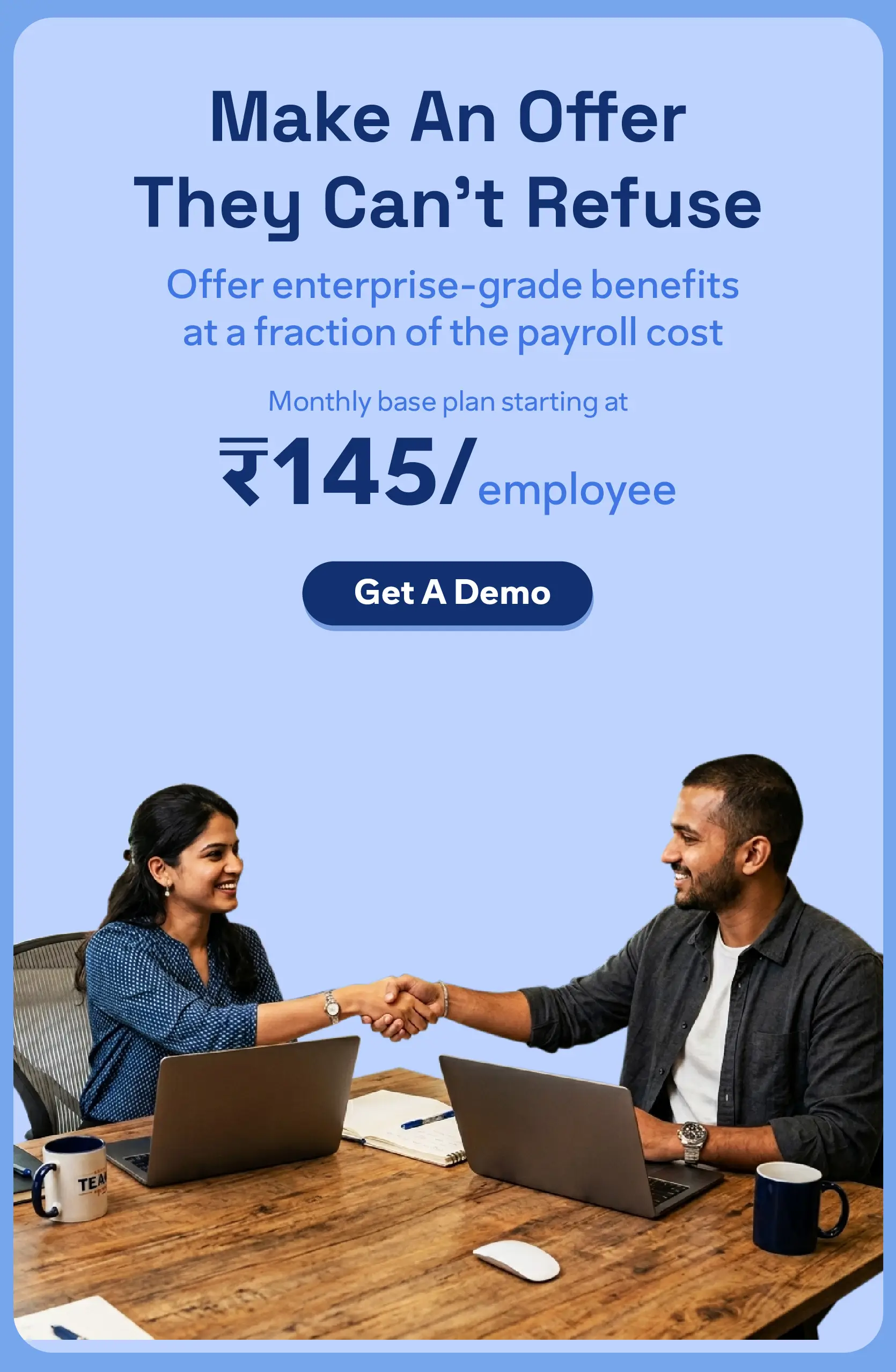
Base Pricing: Starts at just ₹145 per month per employee.
USP & Key Features:
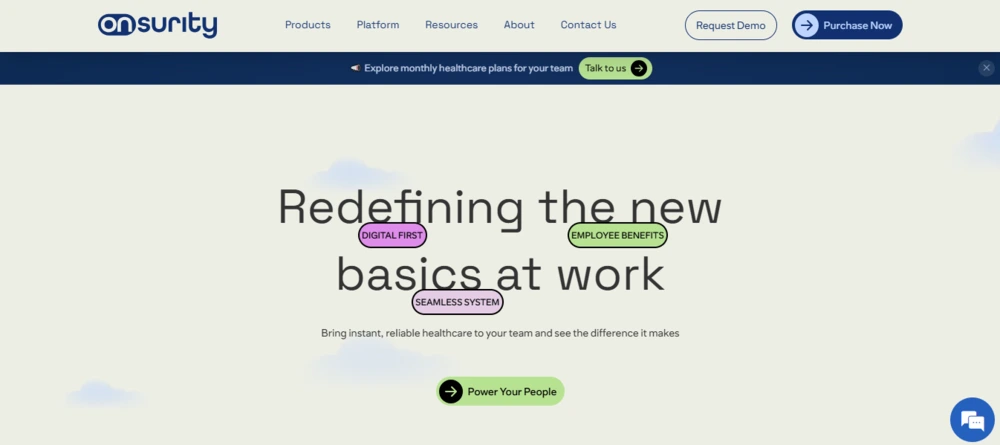
It operates on a flexible, monthly health and wellness membership model, with Group Health Insurance (GHI) inbuilt into the plan. Instead of forcing you to lock up your cash runway in heavy upfront annual premiums, Onsurity offers pro-rata billing that scales dynamically with your exact active headcount.
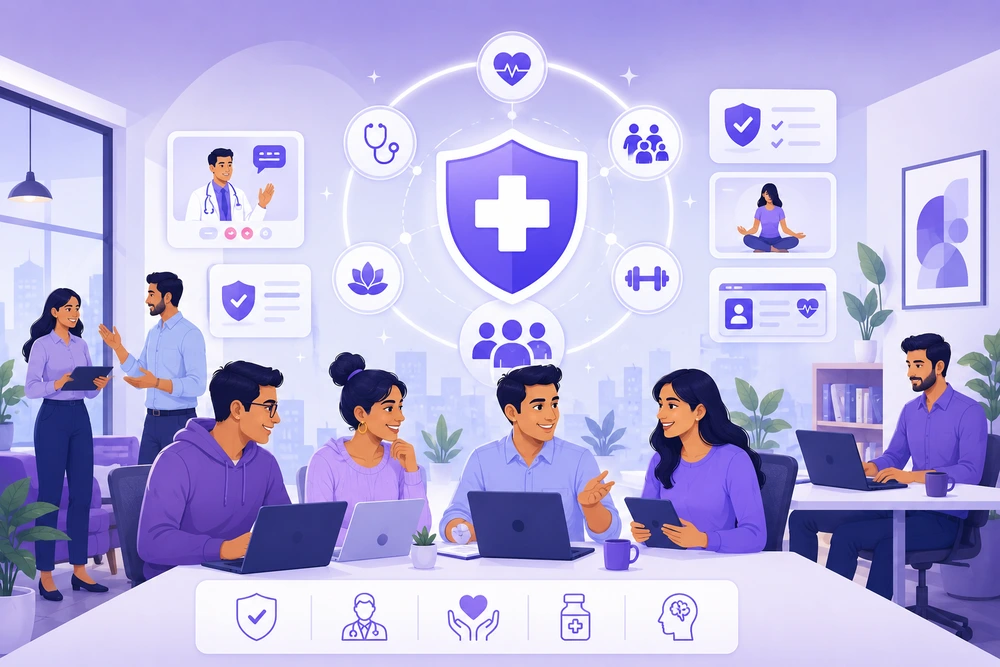
The membership combines core hospitalization cover from Day 1 with a complete daily wellness stack, giving your team discounted fitness memberships through Cult.fit and Fitpass, direct pharmacy discounts for home-delivered medicines, quick lab test bookings, and dedicated mental health support through Amaha. It features seamless HRMS integration, a simple central dashboard for HR admins, and an intuitive mobile app for employees.
Plum
Minimum Team Size: Follows a 7-member requirement. But if your core team only has 3 to 4 employees, you can still qualify by including their immediate dependents (like spouses, children, and parents) to hit the 7-member threshold.
Pricing: Fully customized based on your team’s specific needs, backed by a best-price guarantee to ensure unmatched value.
USP & Key Features:
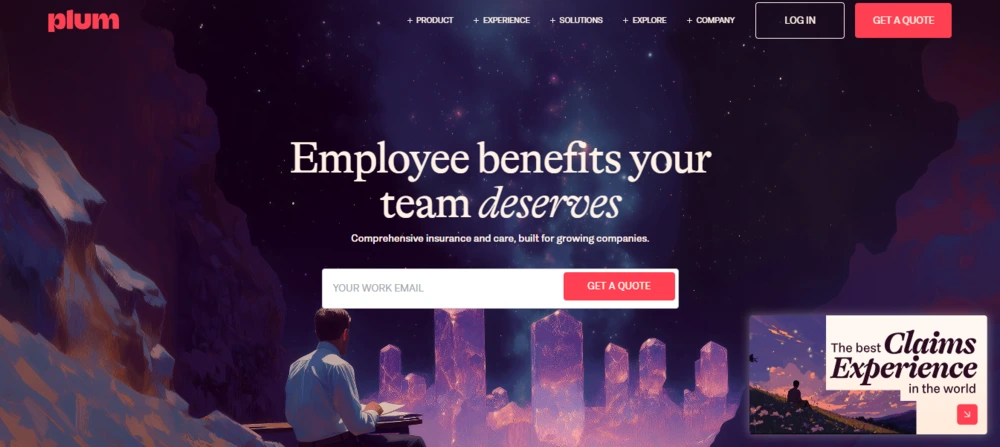
Focuses on complete protection that ensures everyone can be included: covering parents, spouses, children, LGBTQ+ partners, and even in-laws. They use a consultative sales process with peer benchmarking so you can see how your plan compares to the rest of the industry.
Beyond insurance, they bundle holistic healthcare features like telehealth, routine health checkups, and mental health support. The daily workflow is highly efficient with automated API integrations for top insurers and HRIS tools, while employees get a paperless claims experience with a 24/7 helpline and personal doctor assistance.
Pazcare
Minimum Team Size: Starts at 5 to 7 employees.
Pricing: Fully customized based on the specific benefits catalogue you select and your overall group size.
USP & Key Features:
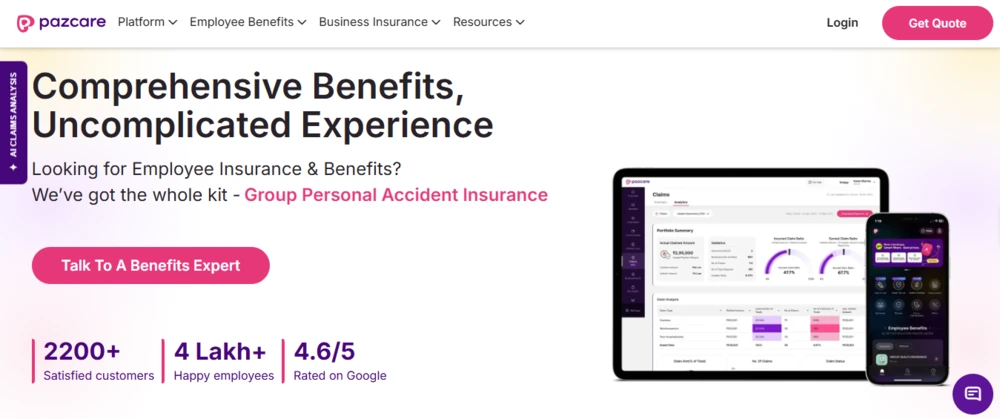
Prioritizes flexibility, transparency, and high personalization by letting you handpick the ideal perks and health benefits your team wants from a broad catalogue of choices so no benefits go to waste. It eliminates manual spreadsheets and email chains by centralizing all benefits administration in one dashboard.
HR teams save hours every month with real-time claims and usage analytics alongside automated employee onboarding and offboarding through integrations with top HRMS tools. For employees, the mobile app offers an easy, paperless claims process with instant filing, 24/7 accessibility, and fewer errors, yielding a strong 70+ NPS score for active claims and support.
Also read: Benefits of Group Health Insurance
Loop
Minimum Team Size: Starts at a baseline of 7 employees to issue a master group policy.
Pricing: Custom tailored packages designed to save organizations up to 30% on standard corporate health plans.
USP & Key Features:
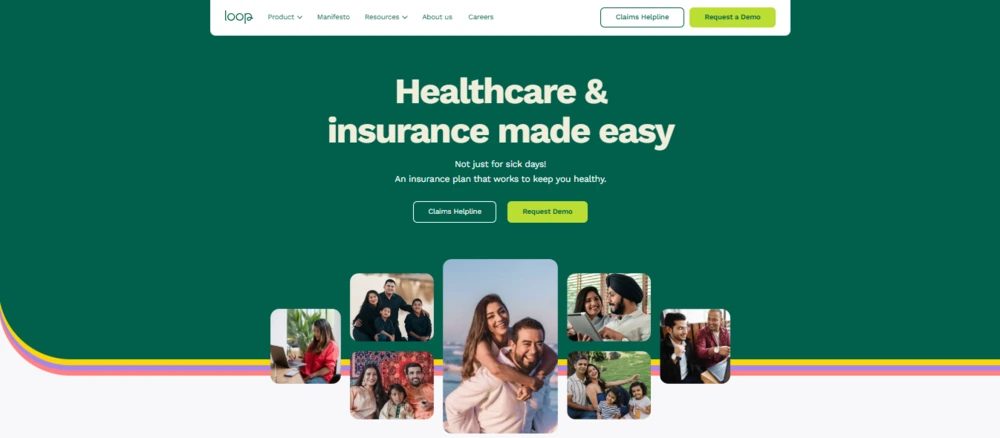
Blends customized corporate health insurance from trusted insurers with unlimited primary healthcare to offset rapidly rising medical costs. Loop focuses on quick, 24/7 digital access to medical professionals, making it incredibly easy for employees to talk to a doctor, manage health records, and receive round-the-clock claims support.
It acts as a highly people-centric benefit by bundling unique employee wellness programs, including an active Employee Assistance Program (EAP), dedicated mental health counselling, live weekly wellness sessions, and a personalized “health index” to track and improve team well-being. They emphasize open, transparent, and pleasant communication so employees never feel left in doubt during a medical emergency.
The Problem with Going Directly to Legacy Providers
Traditional insurance companies face massive infrastructure problems because they operate inside an old, century-old industry framework. Trying to manage employee benefits directly through them turns into a heavy manual administrative burden for founders and HR teams. You will frequently find yourself running from pillar to post, manually chasing third-party administrators (TPAs), tracking legacy vendors, and coordinating with multiple stakeholders just to get a single employee claim passed or an endorsement cleared.
The smartest approach for a scaling startup is to partner with tech-first platforms like Onsurity, Plum, or Pazcare. They partner with some of the top of traditional insurers, combining their massive, reliable financial backing with a smooth digital layer that eliminates the administrative headache entirely.
When these platforms issue your policy, they route the core medical risk through one of these reliable underwriting partners:
- GoDigit Health Insurance — Top feature: Quick, paperless claims. Uses a tech-first approach capable of clearing cashless hospital approvals in under 30 minutes.
- Niva Bupa Health Insurance — Top feature: Premium cashless hospital network. Highly optimized for corporate accounts with smooth hospital desk tie-ups.
- Star Health Insurance — Top feature: In-house medical teams. Settles claims internally through its own doctors rather than outsourcing to external TPAs.
- HDFC ERGO — Top feature: Deep plan customization. Perfect for tailoring complex policy structures, parental covers, and corporate buffer pools.
- Universal Sompo — Top feature: Deep regional and Tier-2 reach. Backed by major institutions with an exceptional hospital grid across smaller towns and remote hubs.
Suggested read: Group Health Insurance: 10 Questions Employers Must Ask
Upfront Cash vs. Flexible Memberships
Team turnover happens much faster at a startup than at a large corporation. Traditional insurance doesn’t really account for this, forcing you to pay the entire annual premium completely upfront. If an employee leaves after three months, that remaining money stays locked up with the insurer.
New-age platforms completely fix this friction by offering a flexible health and wellness membership plugged directly with Group Health Insurance (GHI). For instance, platforms like Onsurity allow you to pay on a monthly subscription basis that adjusts dynamically with your active team size, ensuring you only pay for the months an employee is actually with you.
How Much Coverage Do You Actually Need? (A Quick Guide by Startup Stage)
The right amount of coverage usually depends on your company’s stage and your current hiring goals. You don’t want to burn through cash when you’re small, but you also can’t offer a bare-minimum policy if you’re trying to hire senior talent away from bigger companies.
Pre-seed to Seed Stage (3 to 20 employees): Stick to a ₹3 Lakh to ₹5 Lakh family floater cover per employee. This is the baseline standard for early teams. It gives your people solid protection while keeping your monthly burn rate highly manageable.
Series A (20 to 50 employees): Bump this up to a ₹5 Lakh to ₹7 Lakh family floater. At this stage, you are probably trying to pull in senior engineering or product talent from mid-market companies. A higher coverage limit makes your offer look a lot more competitive.
Series B and Beyond (50+ employees): Go for a ₹5 Lakh to ₹10 Lakh family floater. By this point, your team is growing up. You should also start including corporate maternity benefits and outpatient department (OPD) coverage to provide a truly comprehensive package.
Recommended read: Why Startups Should Buy Group Health Insurance?
Common Mistakes to Avoid When Buying Group Health Insurance
1. Not Reading the Fine Print
If a premium looks too cheap, there is usually a catch. Insurers often make up for a low price by putting strict limits inside the policy. This means things like capping how much they pay for a hospital room, setting limits on specific surgeries, or adding co-pays where your employee has to pay part of the bill out of pocket. If you do not catch these details before you buy, your team will get stuck with a massive surprise bill when they are trying to check out of the hospital. Always look over the exact list of limits and exclusions before you sign anything.
2. Skipping Personalized Coverage for Your Team’s Specific Needs
Picking a generic plan or simply copying what another company does rarely works out. Your coverage needs to match the actual age and life stage of your current team. If your squad is mostly in their 20s, they will get far more use out of features like mental health support, fitness rewards, and online doctor consultations. On the other hand, if you are scaling up and bringing on senior hires, those perks will not be enough. You will need to focus heavily on corporate maternity benefits and plans that allow them to include their parents.
3. Ignoring the insurer’s financial track record
An insurance company needs to have enough cash reserves to actually pay out large claims. Before you pick a provider, check their real-world numbers. Look at both their Claim Settlement Ratio (CSR) and their solvency ratio. The IRDAI requires insurers to maintain a minimum solvency ratio of 1.5 to prove they have enough financial backing to handle a high volume of claims. Always make sure the insurer you choose sits safely above this mark.
What to Ask a Vendor Before You Sign
Before finalizing a policy through an aggregator or an insurer, ask these specific questions:
- What is the exact minimum group size required to maintain this active policy?
- Is there an absolute zero waiting period for all pre-existing conditions from Day 1?
- Are there any specific disease-wise sub-limits or hidden room rent caps?
- Does the maternity benefit cover newborn expenses starting from the very first day?
- Which exact Third-Party Administrator (TPA) is handling the claims, and what is their average turn-around time?
Also read: Group Health Insurance Renewal in India
Conclusion
Winning the talent war against tech giants and deep-pocketed MNCs requires a lot more than just a competitive base salary. Today’s top candidates expect rock-solid protection, making comprehensive health benefits a non-negotiable part of any offer letter.
When you are running a lean startup, the last thing you need is to get bogged down by administrative overhead. Whether you are a founder wearing ten different hats or an HR manager of one handling the entire company’s operations, running old-school employee benefits can quickly become a massive time-sink.
This is exactly where tech-first platforms like Onsurity deliver a game-changing experience for small teams. They take the operational stress completely off your plate by bundling Group Health Insurance with immediate Day 1 medical coverage and a complete daily wellness stack into one sleek app. Your team gets instant access to premium perks, including discounted fitness memberships through Cult.fit and Fitpass, home-delivered medicines with pharmacy savings, quick lab test bookings, and dedicated mental health support via Amaha.
Choosing a flexible, app-based health membership keeps your workforce healthy, your hiring pipeline highly competitive, and your startup runway safe from unpredictable financial shocks. It is zero-friction protection built specifically for the scaling hustle.
FAQs
1. Can we get group health insurance if we have fewer than 7 employees?
Yes. While old-school traditional group policies in India ask for at least 7 employees, modern platforms like Onsurity specialize in micro-team healthcare, letting you set up benefits for squads with as few as 3 members.
2. Is a medical exam required for startup employees under a group plan?
No. One of the best parts of a group plan is that it does not require any pre-policy medical checkups or tests for employees, no matter their age or current health condition.
3. How do we add new hires to our active policy mid-year?
You can simply log into your platform dashboard, type in the new employee’s basic details, and add them instantly. The system will automatically calculate the pro-rata cost for the remaining months of your active cycle.
4. Does group health insurance cover regular doctor visits (OPD)?
Standard group health insurance covers inpatient hospital stays. However, you can choose platforms that bundle everyday wellness benefits, giving your team built-in access to online doctor consultations, discounted diagnostic tests, and pharmacy savings.
5. Is health insurance premium going to increase in India in 2026?
Yes, most experts are tracking an overall premium hike of about 10% to 15% this year. The upward trend is mainly driven by medical inflation. Hospitals are charging more for surgeries, treatments, and room rents, which forces insurance companies to raise their pricing slabs to cover the higher claim costs.

Senior Executive – Content
Payal specializes in the healthcare, wellness, and insurtech space, with a strong focus on educating businesses about insurance and employee wellbeing. She is passionate about simplifying an industry that is often misunderstood and filled with complex jargon, translating it into clear and practical insights that organizations can easily understand and act on. Through her work, she aims to make the insurance ecosystem more transparent and accessible, helping businesses recognize that prioritizing employee wellbeing is not just a benefit but a responsibility.