 Payal Agarwal
 March 23, 2026
 10 min read
 322
322Table of Contents
Mental Illness
Mental health is no longer a conversation India can afford to have in whispers. For a long time, these struggles were kept behind closed doors, but the mental health figures and how they are affecting our society are now difficult to ignore. Between 2012 and 2030, mental health conditions are projected to cost the Indian economy roughly USD 1.03 trillion. This massive economic loss is tied to a human crisis. According to the World Health Organization (WHO), the suicide rate in India has reached 21.1 per 100,000 population.
Currently, the mental health burden in India stands at 2,443 disability-adjusted life years per 100,000 people. Behind these figures are the people we see every day, like our colleagues, friends, and family, who are often navigating deep challenges without a clear way to talk about them.
In this blog, we will look at the most common types of mental illness, how they show up in daily life, and how we can build a genuine culture of support in our workplaces.
Also read: 10 Ways to Improve Mental Health at the Workplace
What Is Mental Illness?
Mental illness is a health condition that changes how you think, feel, and behave. It is not a sign of weakness or a lack of willpower. Many people confuse mental illness with temporary stress, but the two are very different.
While everyone feels overwhelmed by a tough week, those feelings usually fade once the pressure lets up. In contrast, a mental health disorder is persistent. It stays with you and often makes it difficult to handle daily life. It can stall your productivity, strain your relationships, and make everyday tasks feel like a massive burden.
Most mental health issues stem from a combination of factors. It is rarely just one thing. Your genetics, brain chemistry, and past experiences all play a part. Some people have a family history that makes them more vulnerable to certain conditions.
Others might have experienced trauma that changed how they process emotions. Chronic environmental factors like workplace burnout also act as a major trigger. When you leave extreme exhaustion unaddressed, it can shift from a temporary state of fatigue into a long-term clinical condition. Understanding that these are medical issues rather than personal failures is the first step toward recovery.
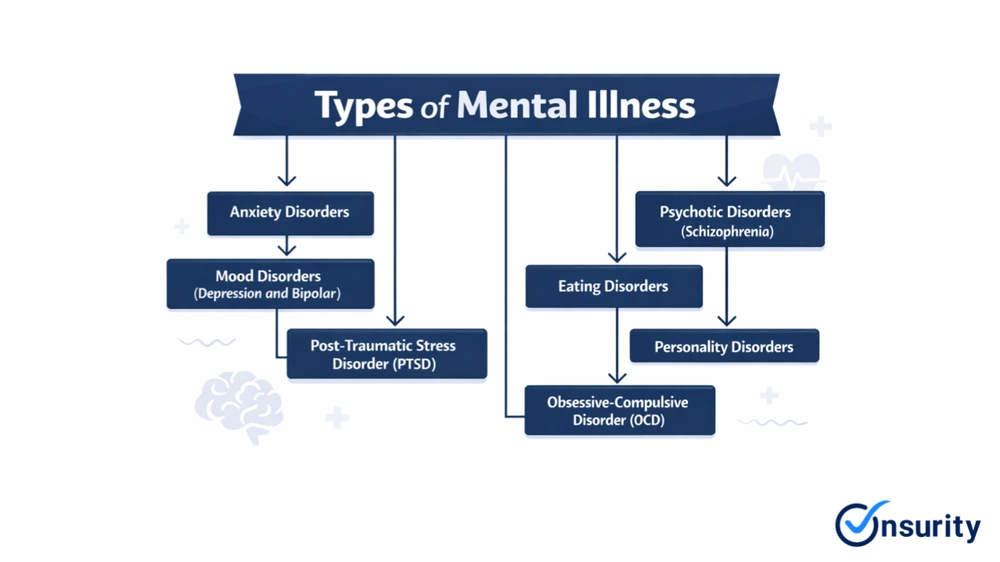
7 Types of Mental Illness and Disorders That Need Attention
Mental health is complex. It isn’t just about feeling “good” or “bad”; it is about how your brain processes reality and manages emotions over time. While there are hundreds of different conditions, these seven categories represent the most common challenges people face. Understanding the specific symptoms and how they show up in daily life is the only way to break the stigma and get people the help they need.
1. Anxiety Disorders
Anxiety is the most common mental health challenge in the world. While a little stress can help you meet a deadline, an anxiety disorder is a different beast. It is a persistent, overwhelming sense of dread that doesn’t go away once the stressor is gone. According to the World Health Organization, 1 in every 7 people globally lives with a mental disorder, with anxiety being the leading condition.
- Generalized Anxiety Disorder (GAD): This involves chronic, constant worry about everyday things like health, money, or family, even when there is no obvious reason for concern.
- Panic Disorder: This is characterized by sudden “panic attacks”; short bursts of intense fear that cause physical symptoms like chest pain, heart palpitations, and shortness of breath.
- Social Anxiety Disorder: It is an intense fear of being judged, watched, or embarrassed in social or professional settings.
- Symptoms: Restlessness, a racing heart, “brain fog,” muscle tension, and disrupted sleep. In the office, this might look like someone who is paralyzed by a simple task or avoids speaking in meetings at all costs.
- Management Tips: Start practising “Box Breathing” (inhale 4s, hold 4s, exhale 4s, hold 4s) to calm the nervous system. Reducing caffeine intake and starting to use grounding techniques like the 5-4-3-2-1 method helps stay in the present moment.
2. Mood Disorders (Depression and Bipolar)
Mood disorders affect your emotional baseline. They are not just “mood swings”; they are sustained emotional states that can last for weeks or months, distorting how you see yourself and the world.
- Major Depressive Disorder (MDD): Depression is a leading cause of disability in India. It is a persistent feeling of sadness and a total loss of interest in things that used to bring joy. WHO reports that depression is a major contributor to the overall global burden of disease.
- Bipolar Disorder: This involves “episodes” of extreme moods. You might experience a “manic” high (feeling invincible, sleeping very little, spending excessively) followed by a “depressive” low (feeling empty and unable to leave bed).
- Symptoms: Extreme fatigue, changes in appetite, feelings of worthlessness, and, in severe cases, thoughts of self-harm. You might notice a colleague’s work quality suddenly plummeting or see them alternate between bursts of hyper-energy and total withdrawal.
- Management Tips: Stick to a strict sleep schedule to stabilize your mood. For depression, try “behavioral activation”, committing to one small activity daily even if you don’t feel like it. For Bipolar, tracking mood triggers in a journal is essential.
Also read: What You Need in Your Mental Healthcare Plans?
3. Post-Traumatic Stress Disorder (PTSD)
PTSD is a disorder that develops in some people who have experienced a shocking, scary, or dangerous event. While often associated with the military and combat, it frequently stems from accidents, physical assault, or even toxic workplace environments.
- Symptoms: Flashbacks (feeling like you are reliving the trauma), nightmares, and “hyper-vigilance” (always being on edge).
- How to identify it: A person with PTSD may have strong physical reactions to “triggers” like loud noises or specific words. They might emotionally detach themselves from others to avoid the pain of the memory.
- Management Tips: Focus on creating a safe physical environment and seek Trauma-Focused Cognitive Behavioral Therapy (TF-CBT). This is the gold standard for processing these memories safely without reliving the pain.
4. Psychotic Disorders (Schizophrenia)
Psychotic disorders are severe conditions that cause a “break” from reality. Schizophrenia is the most well-known type, usually appearing in late teens or early adulthood.
- Symptoms: Hallucinations (seeing or hearing things that aren’t there) and delusions (strong beliefs in things that aren’t true).
- Identification: People may experience “disorganized thinking,” where their speech becomes jumbled, or they stop making sense. They might also show a “flat affect,” where they lose the ability to show any facial expressions or emotional tone.
- Management Tips: Medication compliance is the number one priority. Early intervention services and social support groups are vital to help individuals stay connected to their community and reality.
5. Eating Disorders
These are not just about “vanity” or “dieting.” They are serious, often life-threatening medical illnesses where a person develops an unhealthy obsession with food, weight, and body shape.
- Anorexia Nervosa: Sufferers see themselves as overweight even when they are dangerously underweight. They severely restrict food intake.
- Bulimia Nervosa This condition is defined by a repetitive cycle of “binging and purging.” An individual consumes a large amount of food in a short window and then uses methods like self-induced vomiting, laxatives, or extreme exercise to compensate. The goal is typically to “undo” the binge and prevent weight gain.
- Binge Eating Disorder This involves frequent episodes of eating rapidly and excessively, often reaching the point of physical pain or discomfort. Unlike bulimia, there is no subsequent purging or compensatory behavior to offset the calories. These episodes are almost always followed by intense feelings of guilt, shame, or self-loathing.
- Symptoms: Obsession with calories, extreme weight fluctuations, and disappearing to the bathroom immediately after meals.
- Management Tips: Remove “trigger” apps or social media accounts that promote unrealistic body standards. Working with both a nutritionist and a therapist simultaneously is the best way to address the physical and emotional roots.
Suggested read: 10 Employee Wellness Programs in the Workplace
6. Personality Disorders
A personality disorder is a way of thinking, feeling, and behaving that deviates significantly from cultural expectations. It is a rigid pattern that makes it very hard to maintain healthy relationships.
- Borderline Personality Disorder (BPD): This is marked by an intense fear of abandonment, unstable relationships, and impulsive behavior.
- Antisocial Personality Disorder: A long-term pattern of disregarding or violating the rights of others, often with a total lack of empathy or remorse.
- Symptoms: Frequent, unexplained conflict with others, difficulty keeping a job, and extreme sensitivity to criticism. In a workplace, this often manifests as “toxic” behavior that disrupts the entire team.
- Management Tips: Dialectical Behavior Therapy (DBT) is highly effective. It teaches emotional regulation and interpersonal effectiveness to help manage intense reactions before they lead to conflict.
7. Obsessive-Compulsive Disorder (OCD)
OCD is a cycle of obsessions and compulsions. Obsessions are unwanted, intrusive thoughts that cause intense anxiety. Compulsions are repetitive behaviors or rituals that a person feel they must do to make that anxiety go away.
- Symptoms: A fear of germs (leading to over-washed hands), a need for perfect symmetry, or “checking” rituals (checking the stove or door lock dozens of times).
- Identification: At work, this might look like someone who takes five hours to complete a one-hour task because they are stuck in a loop of re-checking every single detail to ensure “perfection.”
- Management Tips: Use Exposure and Response Prevention (ERP). This involves gradually exposing yourself to a trigger and consciously resisting the urge to perform the ritual for increasing amounts of time.
Quick read: 12 Ways to Keep Employees Happy
How Employers Can Enable Support In Workplaces
An average professional in India spends over 45 hours a week at work. This makes the office the most influential environment for mental health intervention. Employers must move beyond “perks” and build actual systems that protect their people. Here is how you can build a supportive workplace.
A) Implement Comprehensive Employee Assistance Programs (EAPs)
An EAP is your first line of defense. It provides employees with confidential access to professional counselors and mental health experts without any cost to the individual. For an EAP to work, you must guarantee total privacy. Many employees hesitate to use these services because they fear their manager will find out.
You need to communicate clearly that these sessions are strictly between the employee and the professional.
B) Foster a Culture of Transparency and Open Dialogue
Stigma dies when people start talking about it. If leadership remains silent about mental health, employees will continue to hide their struggles until they reach a breaking point. Managers should be trained to spot the early signs of burnout and lead by example.
When a leader admits they are feeling overwhelmed or takes a “mental health day,” it gives the rest of the team permission to prioritize their own well-being. This shift from a “hustle culture” to a “human culture” reduces turnover and increases long-term loyalty.
C) Invest in Wellness Workshops and Resilience Training
Support should be proactive, not just reactive. Instead of waiting for a crisis, provide your team with the tools to manage daily stress. Host regular workshops that focus on practical skills like mindfulness, setting healthy work-life boundaries, and emotional regulation. These sessions should not be boring lectures.
They need to be interactive spaces where employees can learn how to handle high-pressure situations without compromising their health.
Also Read: Mental Health In Workplace Wellness: Why It Matters
Conclusion
True professional success is impossible without a foundation of personal well-being. When we treat mental health with the same urgency as a physical injury, we change the entire trajectory of the workplace. The shift from a culture of silence to one of proactive support is the most important investment any organization can make. This begins with creating a culture of open dialogue and setting clear work-life boundaries.
By taking care of their employees and adopting modern health and wellness platforms, employers provide a vital bridge to preventive care and professional therapy before a crisis hits. Solutions like Onsurity make this transition seamless, offering the tools and resources needed to prioritize the human being behind the employee ID. At the end of the day, a resilient business is built on the mental strength and health of its people.
FAQs
1. What is a mental illness?
Mental illness refers to health conditions that affect a person’s emotions, thinking, or behavior. It is more than just a passing mood; these conditions can make it difficult to get through the day or maintain steady relationships.
2. What are the 10 types of mental illness?
Mental health professionals generally categorize disorders into these groups:
1. Anxiety Disorders
2. Mood Disorders
3. Psychotic Disorders
4. Eating Disorders
5. Personality Disorders
6. Obsessive-Compulsive Disorders
7. Trauma-related Disorders (PTSD)
8. Substance Use Disorders
9. Neurodevelopmental Disorders (like ADHD)
10. Dissociative Disorders
3. What are the 5 types of common mental illnesses?
The most common conditions people face today are Anxiety Disorders, Mood Disorders (like Depression), Post-Traumatic Stress Disorder (PTSD), Obsessive-Compulsive Disorder (OCD), and Personality Disorders.
4. What are 5 serious mental illnesses?
While any condition can be difficult, the following are often classified as serious due to their impact on daily functioning: Schizophrenia (a Psychotic Disorder), Bipolar Disorder, Major Depressive Disorder, Borderline Personality Disorder, and severe Eating Disorders.
5. What causes mental illness?
It is usually a combination of factors rather than one single event. Genetics and brain chemistry play a part, but life experiences like trauma, chronic stress, or a difficult environment are often the primary triggers.
6. How are mental illnesses diagnosed?
Diagnosis is done through clinical evaluations by a psychiatrist or psychologist. They look at your history and symptoms to determine the specific condition, often ruling out physical health problems first.
7. Can mental illnesses be treated?
Yes, with the right support, most people manage their symptoms effectively. Treatment usually involves therapy, lifestyle adjustments, and sometimes medication, helping people lead healthy, successful lives.

Senior Executive – Content
Payal specializes in the healthcare, wellness, and insurtech space, with a strong focus on educating businesses about insurance and employee wellbeing. She is passionate about simplifying an industry that is often misunderstood and filled with complex jargon, translating it into clear and practical insights that organizations can easily understand and act on. Through her work, she aims to make the insurance ecosystem more transparent and accessible, helping businesses recognize that prioritizing employee wellbeing is not just a benefit but a responsibility.