
 Payal Agarwal
 January 8, 2026
 12 min read
 406
406Table of Contents
Have you ever sat at your desk, just staring at your screen because you’re too tired to even think, and your back is aching from sitting for too long? If so, you’re not alone. Many people feel like their corporate job is slowly affecting their health. In fact, studies found that in India, nearly 80% of working professionals report high stress at work, and 60% feel the pressure is so intense they’re ready to quit.
We live in a culture that often glorifies the “always-on” lifestyle. You’re likely one of the many Indian professionals working an average of 46.7 hours a week, one of the longest workweeks in the world. Long days often spill into personal time, with work calls after 8 PM or emails answered when you’re supposed to be on leave. It’s exhausting, right?
Work doesn’t have to drain you. Things are starting to change. Companies are beginning to see that you are a person first and an employee second. That’s why employee wellness programs have come into place. They aren’t just formality or an HR exercise. When used properly, they can help you feel healthier, more focused, and give you more space for life beyond work.
In this blog, we will explore what these programs are, how they help you and why getting involved is one of the smartest moves you can make for your career and wellbeing.
What Are Employee Wellness Programs?
An employee wellness program, also called corporate wellness or workplace wellness program, is a collection of initiatives an employer offers to help you stay healthy: physically, mentally, and emotionally.
These programs focus on preventing illness, improving everyday health, and encouraging healthier lifestyle choices at the workplace. Instead of waiting for problems to show up, wellness programs aim to help you stay ahead of them.
That is why they often include practical and relatable offerings such as fitness activities (yoga classes, subsidized gym memberships), mental health support (on-site counselors or therapy sessions), smoking cessation programs, weight management support, stress management sessions, and regular health screenings. The goal is to make it easy and even fun for you to take care of yourself on the job.
These programs have come a long way, especially after the pandemic. Before, “wellness” often meant an annual health check-up, an insurance plan, or some free snacks; today, it’s holistic. Companies now recognize that your mind and body are both important. For example, a 2024 survey found 90% of employers now include mental health benefits in their offerings.
Flexible hours, remote work options, and on-demand counseling have become part of wellness initiatives. Modern wellness programs are designed to be accessible, diverse, and relevant to everyone. Instead of treating health as a separate thing you deal with outside office hours, these programs bring everyday wellness into your regular work life.
How Wellness Programs Directly Impact Your Work Life
1. Physical Benefits
Regular exercise and health screenings mean you are likely to feel more energetic and fall sick less often. In fact, employees at companies with robust wellness programs take about 56% fewer sick days. Whether it’s joining a yoga session at lunchtime or getting a discounted gym membership, these perks help keep your body stronger and healthier.
2. Career Benefits
Healthier and happier employees tend to perform better and progress faster in their careers. When you feel well-rested and mentally clear, it becomes easier to focus, stay consistent, and contribute more effectively at work. Over time, this reflects in stronger performance, better feedback, and growth opportunities.
A 2022 Gallup-backed survey found that within six months of participating in a wellness program, 78 percent of employees reported improved mental wellbeing. The same study also showed fewer sick days and a 20 percent improvement in performance metrics. When wellbeing is supported consistently, it creates the right conditions for long-term career progress.
3. Mental Benefits
When your workplace cares about mental health, it takes away a lot of your daily stress. Programs often include counseling, meditation sessions, or stress management courses. Studies show that when a company prioritizes wellbeing, employees are about 73% less likely to experience burnout. Imagine being able to talk to a therapist for free or attending a mindfulness workshop; these can reduce anxiety, improve your mood, and leave you feeling more focused. You’ll find yourself handling challenges at work with greater clarity and calmness.
4. Social Benefits
Wellness programs often include group activities: sports teams, walking clubs, or community volunteer days. These create chances to meet co-workers outside your usual team. The bonding from team workouts or group meditation does wonder for workplace friendships. You’ll feel a greater sense of belonging, which makes the workday more enjoyable. (Plus, teams that sweat together tend to collaborate better!)
Your own health and wellbeing deeply affect your work. Participating in a wellness program can mean fewer sick days, more energy, less stress, and better focus on your tasks, and all of that adds up to better job performance and satisfaction.
Also read: 6 Essential Components of Employee Wellness Programs
Top Benefits of Participating in Employee Wellness Programs
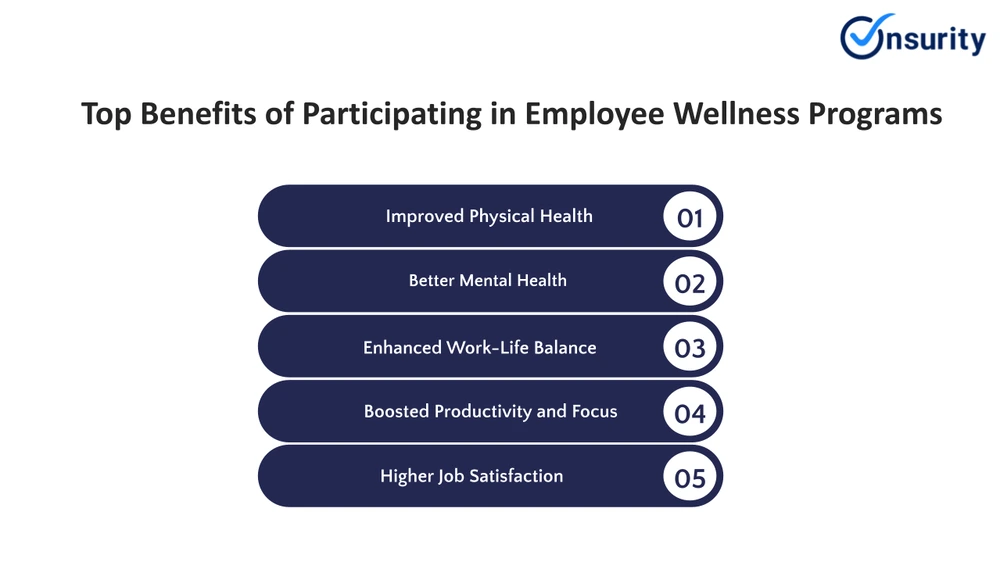
1. Improved Physical Health
Joining fitness activities, attending health seminars, or using gym reimbursements will make it easier to stay active. Over time, regular exercise and good nutrition sustain your energy levels and prevent chronic illness. For example, routine workouts and sports can strengthen your heart and muscles, making it less likely you’ll catch that office cold or feel exhausted in the afternoon.
Over time, these activities can help you feel physically stronger and less drained during the workday. Regular movement and health-focused support make it easier to maintain steady energy levels and recover better after long or demanding days. Many employees also notice improved sleep and fewer physical discomforts, which helps them stay consistent and active over the long term.
2. Better Mental Health
If anxiety, burnout, or afternoon “brain fog” have slowed you down, wellness programs can help. Access to mental health resources (counselors, stress workshops, meditation apps, etc.) means you have tools to cope before stress becomes overwhelming. Participating in mindfulness sessions or talking to a counselor can calm your mind and clear your head for work. In fact, companies that prioritize mental wellbeing see employees with much lower burnout rates.
You will likely notice you handle tight deadlines with more patience, recover faster from setbacks, and even enjoy your work more. Taking care of your mental health at work means you will be happier, more engaged, and more creative on the job.
3. Enhanced Work-Life Balance
Work-life balance plays a big role in how you feel both at work and outside of it. Many employee wellness programs support this by offering flexible schedules, mental health support, stress management resources, and policies that encourage taking breaks and time off when needed.
When these options are available, it becomes easier to manage work alongside personal responsibilities. You can make time for family, health, and rest without constantly feeling pressured to stay online. Over time, this support helps reduce burnout and allows you to return to work feeling more refreshed, focused, and better equipped to handle daily responsibilities.
4. Boosted Productivity and Focus
When you feel healthier and less stressed, it becomes easier to focus on your work. Wellness programs support this by helping you manage stress, stay active, and take better care of your mental and physical health. When your mind is not constantly overwhelmed, you can concentrate better and stay more present in what you are doing.
A study by Gallup has shown that employees with higher levels of wellbeing tend to be more engaged and productive at work. When organizations actively support employee wellness, improvements are often seen in focus, efficiency, and overall performance. Over time, this makes it easier to handle daily tasks and complex projects without feeling mentally drained.
5. Higher Job Satisfaction
When you know your employer genuinely cares about your wellbeing, work naturally feels more positive. Participating in wellness programs often helps you feel valued and supported, which builds trust and satisfaction over time. That sense of care plays a big role in how connected you feel to your workplace.
Over time, this support shows up as higher job satisfaction. When your health and wellbeing are taken seriously at work, it becomes easier to stay motivated, engaged, and committed. You are more likely to feel good about where you work and confident in your role. Being part of a wellness program helps create an environment where you can do your best work and feel good about it.
Each of these benefits connects with the others. Feeling healthier improves your mood, better moods help you perform well, and strong performance leads to greater satisfaction at work. Wellness programs support this positive cycle and help make work feel more sustainable in the long run.
Suggested read: Mental Health in Workplace Wellness
How to Make the Most of Your Company’s Wellness Program
1. Start by Understanding What’s Available
Many employees are only vaguely aware of their wellness benefits. Take some time to go through the details properly. Check what health check-ups, mental health support, fitness options, or doctor consultations are included. Once you know what is available, it becomes much easier to use the program with intention instead of ignoring it.
2. Use What Fits Your Current Needs
3. Use Digital Tools to Save Time
Many wellness programs now offer apps or online platforms, such as the Onsurity app, that come with a range of wellness tools and resources. You can book health check-ups, schedule teleconsultations, and access therapy all in one place. The ease of digital tools means you can fit wellness into busy schedules. For instance, if teleconsultation is available, use it for minor health issues instead of skipping care.
4. Use the Benefits Consistently
Wellness programs are not meant to be used once a year. Whether it is regular health check-ups, therapy sessions, or fitness classes, consistency matters more than intensity. Using these benefits regularly helps you maintain your health instead of reacting only when something goes wrong.
5. Encourage Your Team
6. Give Feedback
Your company likely wants to know what’s working. Attend the occasional survey or share your thoughts with HR. Most companies adjust wellness programs based on employee input. When employees speak up, programs tend to become more practical and relevant over time.
Also read: How To Build a Workplace Wellness Program for Startups
Real-Life Employee Scenarios and How Wellness Programs Help
Here’s a situation many employees can relate to:
Arjun works in a mid-sized company and likes his job, but his days feel packed. Meetings run back-to-back, lunch breaks get skipped, and by the time work ends, he feels mentally exhausted. He keeps telling himself he will focus on his health “once things slow down”, but they never really do.
When his company introduces a wellness program, Arjun does not pay much attention at first. It feels like one more corporate announcement. A few weeks later, he decides to try it after a colleague mentions how easy it is to use.
What he starts with:
- Books a doctor consultation through the wellness benefit instead of taking time off
- Signs up for a short stress management session offered by the company
- Uses preventive health checks that were already included but ignored earlier
Slowly, small things begin to change.
What he notices over time:
- Fewer minor health issues disrupting his workdays
- Better concentration during long meetings
- Less mental fatigue by the end of the day
- More energy to log off without feeling completely drained
Nothing about his role changes. Deadlines still exist. But work starts feeling more manageable because his health is no longer being pushed aside.
This example shows how small changes can make a real difference. You don’t need big routines or major lifestyle changes for wellness support to help. When the right options are available and easy to use, even simple steps can improve how you feel at work and outside of it.
Common Myths About Workplace Wellness
1. Wellness Programs are Only for Senior or Special Employees
2. I Don’t Have Time to Participate
Many people assume wellness programs require extra time they do not have. In reality, most are designed to fit into busy workdays through short sessions or simple activities. Using wellness support does not mean adding more to your plate and can help you manage time and energy better. Even small actions, taken occasionally, can make a difference over time.
3. It Won’t Really Help Me
It is normal to feel skeptical, especially if you have managed stress or health issues on your own. Workplace wellness programs are based on well-researched approaches to improving physical and mental wellbeing. Studies consistently show that employees who engage with wellness support experience lower stress and better mental health. Even limited participation can help you feel more supported and balanced over time.
Quick read: How To Scale Your Small Business Without Compromising On Health Benefits
How Onsurity Supports Employee Wellness
Onsurity helps bring employee wellness programs to life by making healthcare and wellbeing easier to access and simpler to use. Instead of juggling multiple services, employees get support that fits into everyday work and life. Onsurity members get a plethora of health and wellness benefits, all easily accessible via a mobile app. Here are some exciting benefits that come with your Onsurity membership:
- Protection against medical emergencies
- Free doctor teleconsultation
- Discounts on medicines and lab tests
- Gym membership and dental care
- Coverage for your family and dependents
All these exclusive services are a great addition to any corporate wellness program. Ask your HR today for Onsurity benefits and help make your workplace a better place to work at.
Conclusion
Investing time in a wellness program pays off in a big way. By getting involved, you improve your physical health, protect your mental wellbeing, find a better balance between work and life, and boost your productivity and job satisfaction. Small steps like a weekly workout, a quick meditation break, a chat with a counsellor, or a routine health screening add up to a happier and healthier you at work. And that naturally makes your job more enjoyable and your performance stronger.
Don’t wait for tomorrow. Start with one small change today. Sign up for that yoga class, explore the wellness benefits available to you, or take advantage of a free check-up. Your career and your health will thank you.
FAQs
1. Do employee wellness programs improve organizational performance?
2. Why is wellness important in the workplace?
3. How well do workplace wellness programs work?
4. What are employee wellness programs?
5. Are employee wellness programs only about physical fitness?
6. What if my company doesn’t have a wellness program?
7. How does Onsurity support employee wellness?

Senior Executive – Content
Payal specializes in the healthcare, wellness, and insurtech space, with a strong focus on educating businesses about insurance and employee wellbeing. She is passionate about simplifying an industry that is often misunderstood and filled with complex jargon, translating it into clear and practical insights that organizations can easily understand and act on. Through her work, she aims to make the insurance ecosystem more transparent and accessible, helping businesses recognize that prioritizing employee wellbeing is not just a benefit but a responsibility.