 Diksha Gupta
 February 24, 2026
 11 min read
 230
230Table of Contents
Less than 5% of workers ever use their health insurance in a year. Most teams see their health insurance as a backup plan. It’s a safety net for emergencies. However, the data tell a different story. A staggering 83% of employees rarely engage with their benefits until a crisis hits. They don’t see a healthcare ecosystem. They see a dusty PDF in their onboarding folder.
It’s time to flip the script. With Onsurity, we’re changing healthcare from a fixed yearly cost to a flexible daily asset. Health benefits shouldn’t be limited to a single hospital stay. They should be a part of your team’s daily wellness, productivity, and peace of mind.
The stakes have never been higher. Medical inflation in India has reached 14% this year. Underutilization is now more than a “missed perk.” It’s a real financial risk. Every unused benefit is a double loss. It hurts your profits and misses a chance to protect your team from higher costs.
The question is: Is your current plan actually working, or are you just paying for “ghost” benefits?
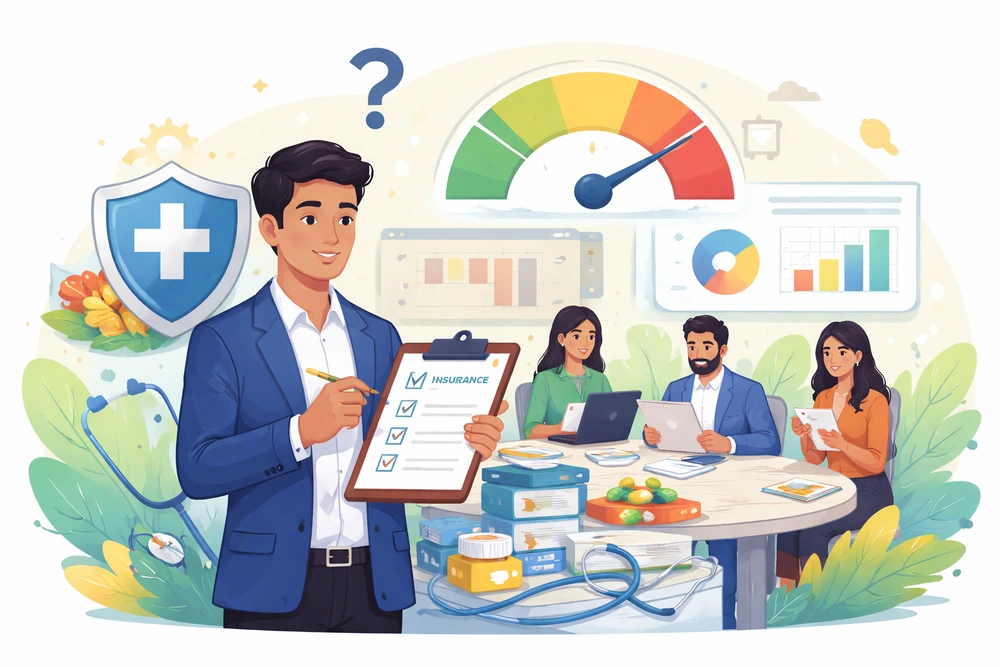
Here’s how to check if your employee group insurance plan is underutilized.
Also read: What is Employer Employee Insurance?
5 Signs Your Employee Group Insurance Plan is Underutilized
Is your health plan a living asset or a line item on a spreadsheet? If you notice these five red flags, your team is likely leaving significant value on the table.
1. The Zero-claim Trap
A lack of claims is often mistaken for a “healthy team.” In reality, it usually signals a communication failure.
Recent 2026 reports show that while claims are rising, the gap between filed and settled claims is widening, with some standalone insurers paying out as little as 64% of what they collect (IRDAI).
If your claim ratio is abnormally low, it likely means your team is intimidated by the process. Indian employees reporting they lack the confidence to navigate the “paperwork maze,” many choose to pay out-of-pocket rather than risk a complex, rejected claim.
2. Out-of-pocket Leakage
Are your employees still swiping their own cards for doctor visits and pharmacy bills?
India continues to have one of the highest Out-of-Pocket Expenditure (OOPE) rates globally, currently at 39.4% to 45% of total health spending.
If your employees are unaware of their OPD or teleconsultation benefits, they are effectively paying a “double tax”, the premium your company pays and the cash they spend at the chemist.
3. Ignored Preventive Care
Most Indians treat healthcare as reactive, not proactive.
if it doesn’t hurt, it isn’t broken. But the latest Apollo Health of the Nation 2025 report reveals a silent epidemic. Millions are living with undiagnosed chronic conditions despite showing no visible symptoms. Notably, 26% were found hypertensive and 23% diabetic despite being asymptomatic, underlining that a symptom-led healthcare model is no longer viable.
It proves that “waiting for symptoms” is a dangerous strategy for a young workforce.
4. The “Parental Coverage” Confusion
Parental care is the primary emotional driver for the Indian workforce. However, it remains the most misunderstood benefit in the HR folder.
The Reality Check: Nearly 20% of your employees are “sandwiched caregivers,” balancing the needs of children and aging parents. Yet, there is a massive trust deficit: with some private insurers showing a claim payout ratio as low as 68%, employees are understandably paralyzed.
This is why 71% of households sit on unused policies. They aren’t just “confused” about the fine print; they are terrified of the “Co-pay Surprise” (often 10-30%) or a rejected claim for a pre-existing condition. In a crisis, this uncertainty leads to “usage paralysis,” where the employee pays out-of-pocket rather than risking a rejected insurance claim for their parents.
5. Digital Inertia: The “Silent App” Syndrome
In 2026, a health plan is only as good as its accessibility. If you team up with a digital-first provider but only send the onboarding email, you have a big utilization gap.
- The “Download-and-Delete” Habit: India recorded a massive 26.4 billion app downloads recently, the highest in the world. However, industry data shows that 77% of users abandon a new app within the first 72 hours. In a corporate setting, employees often download the app once. They do this to prove they have “set it up” or to save their e-card. Then, they rarely open it again.
- Recent workforce studies for 2025-2026 show that employee engagement in India has dropped to 19% from 24%. This is the largest decline in the world. This “disengagement” applies to health apps. If the app feels like a “work chore” instead of a lifestyle tool, usage remains flat.
- Only 10% of people in India are comfortable with English. Still, most corporate health apps only use English. In 2026, “vernacular-first” will no longer be optional. Bhashini (Digital India) states that offering health services in local languages can boost the use of digital services. This can increase by over 50% in Tier-2 and Tier-3 cities.
- If your team isn’t using the app for daily medicine discounts or quick doctor chats, they’re just waiting for an emergency. This means 90% of your plan’s daily value is ignored. Meanwhile, telehealth use is about 20% in the general workforce.
Quick read: Employee Benefits in India
The SME Teacher’s Corner: Explaining the “Hard Stuff” Simply
Health insurance is famous for its jargon. Let’s break down the complex terms into everyday language using simple analogies.
1. Co-pay
Think of a co-pay as splitting the bill at a restaurant. If your policy has a 10% co-pay, you pay a part of each medical bill. The insurer covers the rest.
- If the total bill is ₹1,000, you pay for the dessert (₹100), and the insurance company covers the main course (₹900).
2. Restoration
What happens if you use up your entire insurance limit (Sum Insured) mid-year? Restoration (or refill) acts as your backup plan.
- It’s like a mobile data top-up. If you hit your 5GB data limit, your provider will reset it to 5GB for free. This way, you won’t be stuck when you need to go online, like during your next illness.
3. Waiting Periods
A waiting period is the time you wait to claim for certain diseases you had before buying the policy.
- The Update: In a big change for 2024-25, the IRDAI has reduced the waiting period for Pre-Existing Diseases (PED). It’s now cut from 4 years to 3 years. You now get full protection for chronic conditions. This includes diabetes and hypertension. You receive this a whole year earlier than before.
4. Moratorium Period
The Moratorium Period stops questions about your medical history. This lasts for a specific number of years. As of April 1, 2024, the IRDAI reduced this period from 8 years to 5 years. After you renew your policy for 5 years, the insurer can’t deny your claim. They can’t use old health issues or “non-disclosures” against you. They can only do this if they prove you committed fraud.
Suggested read: Buy Group Health Insurance for Employees
The High Cost of “Not Using Employee Group Insurance Plan”
Providing health insurance is only half the battle. If your team ignores the plan, the “cost of silence” can hurt your company and your employees.
1. Financial Vulnerability
Medical inflation in India is currently at a staggering 14%, the highest in Asia. This means that a surgery that cost a lot in 2020 is now too expensive for most middle-class families.
- Example: In 2020, a heart bypass surgery (CABG) typically cost between ₹4 Lakh to ₹5 Lakh. By 2026, the cost of the same procedure in a Tier-1 city may reach ₹12 Lakh to ₹15 Lakh. This is because hospital consumable costs are rising and technology is advancing.
- An employee with a low-coverage plan might not know about their restoration benefits. This can lead to a big “financial shortfall” when they are most vulnerable.
2. Employee Burnout
When employees don’t know their benefits, they see every small illness as a money problem.
- Poor mental and physical health costs Indian employers about ₹1.1 Lakh Crore ($14 Billion) each year. A big part of this is “presenteeism.” This happens when employees come to work sick because they’re scared of the hospital bill.
- Minor health issues can turn into chronic burnout and long-term absenteeism. This happens when people do not use a covered ₹0 teleconsultation to get help.
3. The Poverty Trap
In India, healthcare is the single largest cause of debt.
- Each year, about 39 to 52 million Indians fall into poverty. This occurs due to “catastrophic health expenditure.” This means they spend more than 10% of their income on a single medical event.
- Even people with corporate insurance can fall into this trap. Many people aren’t aware of “Hidden Assets.” These include consumables cover and domiciliary hospitalization. They spend their savings on costly medicines and home care. This slowly drains the wealth they are trying to build.
4 Strategies to Improve the Usage of Employee Group Insurance
High insurance premiums are only an investment if they are used; otherwise, they are a sunk cost. Here’s how to turn “ghost benefits” into active engagement. Use the latest strategies for 2026.
1. The “Healthy Start” onboarding
Don’t wait for an emergency to introduce your health plan. Onboarding is the “Golden Window” for engagement.
- Research shows that 85% of employees use their benefits. This happens when they receive education during onboarding. Instead of a passing mention, dedicate a 15-minute slot on Day 1 to help them set up their profile.
- Encourage new hires to schedule their first ₹0 teleconsultation. They can also order their first set of discounted vitamins on Friday. This breaks the “crisis-only” barrier immediately.
2. Pick the Right Channel
In 2026, if your benefits communication is stuck in an email, it is effectively invisible.
- While email open rates hover around 20%, WhatsApp messages see a 98% open rate in India. Set up automated WhatsApp triggers for “Benefit Reminders.” For example, remind users to take advantage of their dental cleaning perk in February.
- Move beyond the “Dusty PDF.” The Onsurity Super App serves as a 24/7 health concierge. One app that centralizes medicine delivery, lab tests, and fitness tracking solves the “Super App.” Employees will have a reason to use it weekly, not just yearly.
3. Gamifying Wellness
Engagement thrives on competition and instant gratification.
- Studies from 2025-2026 show that 83% of employees are more motivated. This happens when their wellness program is gamified. Use the app’s built-in fitness tracking to launch “Step Challenges.”
- The ROI: When employees track their steps, they earn “Coins” or vouchers. This keeps the health plan in their thoughts. This “habit stacking” helps them know which app to open when they need a doctor.
4. Quarterly Health Days
Static benefits need physical (or virtual) touchpoints to feel real.
- Host Quarterly Health Days in partnership with providers. These aren’t just “talks.” They are action-oriented sessions.
- Host posture correction workshops for remote teams.
- Offer “Parental Care 101” webinars.
- Companies that hold regular health check-in events enjoy significant boost in benefit use. “Special Days” change insurance from just a corporate duty to a clear part of your company’s culture.
Also read: How To Choose The Best Group Insurance For Employees In India?
Why Onsurity Solves the Utilization Gap
In 2026, with medical costs rising, Onsurity has revamped the “benefit experience.” This change aims to connect paying for a plan with truly benefiting from it.
1. The “Monthly Subscription” revolution
Traditional insurers require a large annual payment upfront. This can affect an SME’s working capital.
Onsurity pioneered India’s first monthly healthcare subscription. Much like you pay for Slack or Zoom, you pay for your team’s health in manageable monthly cycles.
Cash Flow Positive: This model turns a heavy annual liability into a predictable operational expense. Plus, with pro-rata billing, if an employee leaves on the 15th, you stop paying for them immediately. No more “sunk costs” on premiums for people who aren’t even on your payroll anymore.
2. The One-Stop Super App: Removing the HR “Middleman”
The #1 reason for underutilization is friction. When an employee has to ask HR for a policy copy or a claim form, they often just give up.
- The Onsurity Super App puts everything in the employee’s pocket. It offers teleconsultations, lab tests, and medicine discounts of up to 20%. Plus, it includes a digital health card.
- Seamless Claims: By 2026, more than 30% of claims in India will be filed through mobile apps. Onsurity’s interface lets employees submit requests in just seconds. Removing HR from the “paperwork loop” saves your admin team hundreds of hours. This change also empowers your employees to take charge of their own health.
3. 24/7 Support: The “Good Doctors” Advantage
“Claim anxiety” is real. Over half of employees, avoid using their benefits. They fear getting a rejection letter.
- The Concierge Experience: Onsurity doesn’t just give you an app; it gives you a team. The “Good Doctors” concierge offers 24/7 help. They guide members with hospital admissions and make paperwork faster.
- The Speed Factor: Most industries take 6 to 8 hours for discharge times. Onsurity has cut this to under 1.5 hours in most of the cases. Employees feel confident using their benefits when they know an expert is there to help them.
Conclusion
In 2026, the definition of a “Super Boss” has shifted. It’s no longer just about meeting targets; it’s about meeting the human needs of your team. A well-utilized health plan is the most visible sign of a cared-for team.
When your employees view insurance as more than a “last resort,” but as a daily wellness tool, health improves. You also witness a cultural shift.
Don’t let your health insurance be a “hidden goldmine” that never gets mined. Turn it into a living asset that grows with your team.
Check your team’s utilization today.
Is your current plan gathering dust or driving growth? Don’t wait for a crisis to find out.
Book a free health audit with Onsurity. Let’s make your employee benefits your top competitive edge.
FAQs
1. Is the premium paid for my team’s health insurance tax-deductible?
Yes. Under Section 37(1) of the Income Tax Act, premiums for Group Health Insurance (GHI) are 100% tax-deductible business expenses.
a) The Benefit: It lowers your company’s taxable income.
b) The “Perk” Factor: This premium is not a taxable benefit like a salary hike. So, it’s a smart way to increase compensation without extra taxes.
2. If an employee leaves mid-year, do I lose the premium?
With traditional insurers, yes, as you pay the full year upfront. However, the Onsurity Fix uses monthly subscriptions or pro-rata billing. If a team member leaves, you simply offboard them and stop paying for that slot immediately. Your budget stays perfectly synced with your actual headcount.
3. Is a “hospitalization-only” plan enough for a young team?
Statistically, no. Gen Z and Millennials value lifestyle health over “worst-case” surgery. Seventy-three percent of Indian workers want maternity and OPD benefits. However, only 28% of employers offer these benefits. Younger teams often see the plan as “useless” without Telehealth or mental health support. This view leads to the underutilization you want to address.
4. Can employees include their “in-laws” in the plan?
Usually, yes. Most 2026 plans provide an “Either/Or” choice. Employees can cover either their biological parents or their in-laws.
HR Tip: To avoid “Parental Confusion” for 71% of employees, make it clear if your policy allows “cross-selection.” This means one parent and one in-law can be included. Clear communication here is a major “Super Boss” move for recruitmen

Clinical Content Strategist B.Pharma
A Senior Medical and Insurance Content Strategist with over 6 years of experience in healthcare, Ayurveda, and insurance, Diksha has written for industry leaders such as Onsurity, Tata 1mg, mfine, and Medi Assist. A Bachelor of Pharmacy graduate and the creator of the Insurance Dictionary; she holds a Professional Diploma in Counseling Psychology and is certified in Counseling and Guidance by the International Psychological Association.