Diksha Gupta
 March 17, 2026
 10 min read
 4007
4007Table of Contents
Telemedicine Apps
In 2026, India’s telemedicine situation has evolved into a hyper-competitive $4.48 billion arena where private giants are racing to own your entire “health journey.” We’ve moved beyond simple consultations into an era of “Digital Dependability,” where 5G-enabled apps don’t just connect you to a doctor, they sync with your wearables, triage your symptoms with AI, and dispatch lab tests to your door within 60 minutes.
While the government has built the “digital highways,” it is the private sector that has built the “super-apps.” Today, over 55% of the demand for virtual care is captured by private hospitals and specialized health-tech platforms. With mHealth (mobile health) commanding 47% of the market, the smartphone has officially become the primary point of entry for healthcare for millions of urban and Tier-2 households.
The stakes are no longer just about convenience; they are about Clinical Confidence. From Practo’s massive specialist network and Tata 1mg’s supply chain dominance to the AI-first approach of MFine and the hospital-backed reliability of Apollo 24/7, we’ve analyzed the titans of the industry.
Here are the Top 5 Telemedicine Apps in India for 2026 that are setting the standard for the next decade of private healthcare.
Top 5 Telemedicine Apps in India
Here are the best telemedicine apps in India that provide healthcare delivery by leveraging technology to enhance access, convenience, and quality of care.

1. Tata 1mg
Tata 1mg is India’s leading online healthcare platform that offers a wide range of services including online pharmacy and doctor on demand. It is a joint venture between Tata Digital and 1mg Technologies Pvt. Ltd., combining Tata Group’s expertise in various sectors with 1mg’s experience in the healthcare industry.
The company boasts over 2 lakh+ allopathic medicines being available on the platform at the best prices. The medicines cover homoeopathy, ayurvedic medicines, medical devices, health supplements, and personal hygiene products.
The app offers discounts and savings on medical bills and delivers medicines to over 1000+ cities within the same day or the next day.
The app also allows online doctor consultations from various specialties like general physicians, gynecologists, dermatologists, etc. The app offers over 2,000 types of lab tests and health check-ups and has partnered with 120+ top verified labs like Dr Lal Path Labs, SRL Diagnostics, Thyrocare etc.
Tata 1mg has a rating of 4.7 on the App Store and 4.6 ratings on the Google Play Store, propelling it to among the best telemedicine apps in the country.
Suggested Read: Top 5 Nutrition Startups in India

2. Practo
Practo is a leading integrated healthcare app founded in 2007 in Bangalore by Shashank and Abhinav Lal. Initially known for booking doctor appointments (doctor on demand), Practo has evolved into a comprehensive platform offering various medical services. It operates in over 100 Indian cities and is popular for its doctor-on-demand consultation services.
Practo has a comprehensive medical directory with detailed information on over a lakh doctor partners nationwide. The company provides partnerships with local pharmacies for prescription upload and delivery. Members are allowed online appointment booking with doctors at over 9,000 leading hospitals and clinics.
The app also offers a reminder based on previous purchases and one can use Practo coupons for savings on blood tests or medical tests. Practo is known for its user-friendly interface, extensive network of healthcare providers, and wide range of healthcare services available on its platform.
Practo has a rating of 4.7 on the App Store and 4.5 ratings on the Google Play Store, making it among the best telemedicine apps in the country.
Quick Read: Top 10 HealthTech Startups in India

3. MFine
MFine is a leading telemedicine platform that connects users with qualified doctors and healthcare professionals for online consultations, diagnosis, and treatment. Users can book appointments with healthcare providers for video consultations, audio consultations, or chat-based consultations, depending on their preferences and requirements.
MFine offers access to a wide range of medical specialities, including general medicine, dermatology, paediatrics, gynaecology, psychiatry, orthopaedics, cardiology, and more. After a teleconsultation, doctors at MFine can issue digital prescriptions (e-prescriptions) for medications, diagnostic tests, or follow-up consultations as needed.
Users can conveniently access their prescriptions through the MFine app and use them to purchase medicines or book diagnostic tests.
Mfine has 4.2 ratings on the app store and 4.6 ratings on Google Play.
Related Read: 10 Best Employee Wellness Programs

4. Netmeds
Netmeds is a leading online pharmacy and healthcare platform in India. It allows users to purchase prescription and over-the-counter medications, wellness products, personal care items, and medical devices through its website and mobile app. The company was acquired by Reliance Retail, a subsidiary of Reliance Industries Limited (RIL), one of India’s largest conglomerates.
Netmeds offers a comprehensive selection of prescription medicines, generic drugs, and branded medications across various therapeutic categories. Users can search for specific medicines, browse by medical condition, or explore curated health categories.
Netmeds frequently offers discounts, promotional offers, and cashback deals on medicines and healthcare products, allowing users to save on their purchases. The platform also provides loyalty programs and referral benefits to incentivise repeat purchases and user engagement.
Netmeds has a rating of 4.7 on the App Store and 4.3 ratings on the Google Play Store.
Also, Read: Top 5 HealthTech Products

5. Apollo 24/7
Apollo 24/7 is India’s largest omnichannel healthcare platform, bridging four decades of hospital legacy with high-speed digital care. It is built to serve as a comprehensive, integrated ecosystem for every stage of a patient’s journey.
- Clinical Authority: Unlike aggregator platforms, it provides direct access to 4,400+ Apollo-verified doctors across 55+ specialties. You can connect via chat, voice, or video in under 15 minutes, ensuring high-quality, hospital-backed consultations.
- Lightning-Fast Logistics: It has redefined speed with 19-minute medicine delivery in major metros (Delhi NCR, Hyderabad, Bengaluru, Kolkata), supported by the vast Apollo Pharmacy retail network.
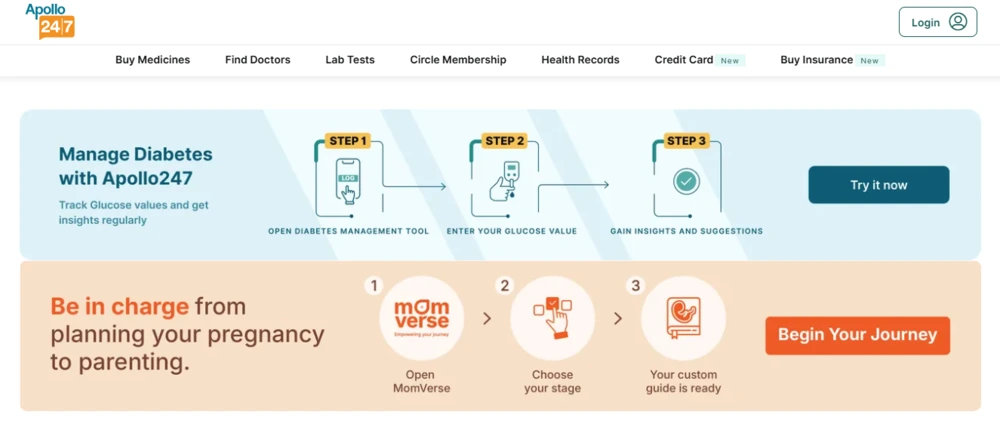
- Integrated Ecosystem: The app blends clinical advisories with technology, featuring the “Ask Apollo” AI symptom checker and a “Digital Vault” that syncs all your prescriptions, lab reports, and vitals in one place for seamless continuity of care.
- Diagnostics & Proactive Health: With seamless integration into Apollo Diagnostics, the app offers home sample collection with fast, accurate reporting. It also includes the “Circle” membership, providing priority access to specialists, exclusive deals, and tailored wellness plans.
- Market Presence: With over 20 million users and 4.4+ star ratings, it remains the top choice for patients who prioritize institutional trust, medical accuracy, and a “one-stop” digital-to-physical healthcare experience.
Benefits of Telemedicine Apps
Here are the best telemedicine apps in India that provide healthcare delivery by leveraging technology to enhance access, convenience, and quality of care.
1. Convenience
Telemedicine apps provide convenient access to healthcare services from the comfort of home or any location with internet access. Patients can schedule appointments, consult with doctor on demand, and receive medical advice without the need for travel or waiting rooms, saving time and effort.
2. Accessibility
Telemedicine apps improve access to healthcare, particularly for individuals in remote or underserved areas with limited access to healthcare facilities. Patients can connect with healthcare providers regardless of geographical barriers, helping to bridge the gap in healthcare disparities.
3. Timely Care
One of the benefits of Telemedicine is that it enables timely medical intervention, especially for non-emergency conditions and minor ailments. Patients can receive prompt medical advice, diagnosis, and treatment without having to wait for in-person appointments, reducing the risk of delayed care and complications.
4. Cost Savings
Telemedicine apps can lead to cost savings for both patients and healthcare providers. Patients save on travel expenses, parking fees, and time off work associated with traditional clinic visits. Healthcare providers can reduce overhead costs associated with physical infrastructure and administrative expenses.
5. Continuity of Care
Telemedicine facilitates continuity of care by enabling follow-up consultations and ongoing monitoring of patients’ health remotely. Patients can maintain regular communication with their healthcare providers, receive medication adjustments, and track their progress, leading to better health outcomes.
6. Reduced exposure to infections
Especially relevant during pandemics or disease outbreaks, one of the benefits of telemedicine is that it reduces the risk of exposure to infectious diseases by minimising in-person contact. Patients can receive medical care while minimising the risk of transmission of contagious illnesses.
7. Access to Electronic Health Records (EHR)
Telemedicine apps with integrated EHR systems allow for quick access to patient records, reducing errors, improving efficiency, and facilitating seamless communication of health information across platforms.
Also, Read: Group Health Insurance for Employees
Choosing the Right Telemedicine App for You
When choosing the right telemedicine app, several key factors should be considered to ensure the success and effectiveness of the platform. These factors include:
1. User Interface and Experience
The chosen app should have an intuitive and user-friendly interface that is easy to navigate, even for users who may not be tech-savvy. Clear and well-organised menus, buttons, and navigation paths help users find what they need quickly and efficiently. The registration process should be simple and straightforward, with clear instructions and minimal required fields. Onboarding screens or tutorials can help users understand how to use the app and its features effectively.
2. Range of Services Offered
When choosing the right telemedicine app, it’s essential to consider the range of services offered to ensure it meets your healthcare needs comprehensively. Look for diverse services like online doctor consultations, appointment scheduling, prescription services, medicine delivery and diagnostic test booking.
Ensure the app provides access to emergency services or facilitates referrals to physical healthcare facilities when needed, ensuring continuity of care and appropriate medical intervention in emergencies.
The app should support various communication channels for consultations, including video calls, audio calls, and text-based chat, allowing users to choose the most convenient option for their needs.
Also, Read: Why You Need to Use Doctor Teleconsultations?
3. Doctor Availability
When choosing a telemedicine app, it is essential to consider the availability of doctors on demand to ensure that patients can access healthcare services when needed, especially in urgent or emergency situations.
Some apps provide a comprehensive medical directory, appointment booking, and online consultations. One must also look for 24×7 access to doctors, allowing patients to consult with healthcare providers at any time.
4. Security and Privacy Measures
Ensuring security and privacy measures are paramount when selecting a telemedicine app to safeguard sensitive medical information and maintain patient confidentiality. The app should use robust encryption protocols to secure all communications between users and healthcare providers, ensuring that sensitive data transmitted during consultations remains confidential and protected from unauthorized access.
The app should employ secure user authentication mechanisms, such as multi-factor authentication or biometric authentication (e.g., fingerprint or facial recognition), to ensure that only authorised users can access the app and their medical records. It should maintain comprehensive audit trails and activity logs to track access to patient data, record user activities, and detect and investigate any unauthorized access or suspicious activities.
Apart from these, the app should have transparent privacy policies that clearly outline how patient data is collected, used, stored, and shared, as well as the rights and options available to users regarding their personal information.
Quick Read: 10 Benefits of Healthcare Membership from Onsurity
5. Patient Feedback and Ratings
Patient feedback and ratings play a crucial role in enhancing the quality, transparency, and trustworthiness of telemedicine apps. Sincethese apps are available for download on app stores such as the Apple App Store for iOS devices and the Google Play Store for Android devices., users can view ratings and read reviews left by other users who have downloaded and used the app.
Many telemedicine apps have official websites where they may showcase user testimonials, reviews, or ratings. Visiting the app’s website can provide additional information about the app’s features, services, and user feedback.
There are several third-party review platforms and websites that specialise in reviewing and rating telemedicine apps and healthcare services. These platforms may offer detailed comparisons, user reviews, expert opinions, and ratings for various telemedicine apps, helping users make informed decisions.
Conclusion
In 2026, telemedicine has transcended its role as a simple consultation tool to become the intelligence layer of modern healthcare. We have moved beyond the “video-call era” into a sophisticated ecosystem where AI, 5G, and real-time wearable data work in harmony to predict health issues before they become emergencies. Private health-tech leaders are no longer just connecting patients to doctors, they are orchestrating “Digital Front Doors” that make healthcare as seamless and proactive as any other digital service.
For the modern workforce, this integration isn’t just a matter of convenience; it’s a vital safety net. By adopting an integrated health platform, businesses are doing more than offering a perk, they are providing their teams with 24/7 access to AI-driven diagnostics, instant medicine delivery, and hospital-grade virtual care.
With Onsurity this transition is possible by bringing comprehensive healthcare, from teleconsultations and e-pharmacy discounts to insurance and mental wellness support, onto one intuitive, digital-first platform. With flexible monthly subscriptions starting at just ₹145 per employee, Onsurity allows fast-growing businesses to provide enterprise-grade health benefits without the burden of massive upfront annual premiums.
If you are a business leader aiming to build a more resilient and supported team, don’t just settle for basic coverage. Give your employees the “Digital Dependability” they deserve. Invest in a platform that prioritizes their long-term vitality, ensuring that being a great professional and staying healthy go hand-in-hand.
FAQs:
1. What is a telemedicine app?
A telemedicine app is a digital platform that allows you to consult with healthcare professionals remotely via video calls, voice calls, or chat, enabling diagnosis and medical advice without visiting a physical clinic.
2. Which is the most used telemedicine app in India?
While usage varies by region, leading platforms like Tata 1mg, Apollo 24|7, Practo, and mfine are among the most widely used and trusted apps in India for their integrated pharmacy, diagnostic, and consultation services.
3. Is telemedicine allowed in India?
Yes, telemedicine is fully legal and regulated in India under the Telemedicine Practice Guidelines issued by the Ministry of Health and Family Welfare, provided the doctor is a Registered Medical Practitioner (RMP).
4. Are telemedicine apps secure for sharing personal health information?
Yes, verified platforms must comply with India’s Digital Personal Data Protection Act (DPDPA) and use encrypted channels to protect your privacy; always ensure the app has a clear privacy policy before sharing sensitive data.
5. What services can I access through a telemedicine app?
Beyond doctor consultations, you can access e-prescriptions, order medicines, book home-collection lab tests, manage digital health records, and even consult specialists for chronic disease management.
6. Can I get a prescription through a telemedicine app?
Yes, after a valid teleconsultation, a registered doctor can issue a digitally signed e-prescription, which is legally valid for purchasing medication from pharmacies.
7. Does health insurance cover telemedicine appointments?
Yes, the IRDAI has directed insurers to cover telemedicine consultations under policies that already provide coverage for OPD or doctor consultations, subject to your specific plan’s terms.
8. Are telemedicine apps suitable for emergencies?
No, telemedicine is not for medical emergencies. In critical situations requiring immediate life-saving intervention, you should always visit the nearest emergency room or call an ambulance immediately.

Clinical Content Strategist B.Pharma
A Senior Medical and Insurance Content Strategist with over 6 years of experience in healthcare, Ayurveda, and insurance, Diksha has written for industry leaders such as Onsurity, Tata 1mg, mfine, and Medi Assist. A Bachelor of Pharmacy graduate and the creator of the Insurance Dictionary; she holds a Professional Diploma in Counseling Psychology and is certified in Counseling and Guidance by the International Psychological Association.