
 Diksha Gupta
 February 24, 2026
 9 min read
 407
407Table of Contents
For early-stage founders and HR managers, workplace wellness is no longer a good-to-have. It’s a must-have in order to attract and retain top talent. Burnt-out teams are less productive, more prone to errors, and far more likely to leave. In India’s competitive talent market, skilled professionals have many choices. So, startups can’t afford high turnover or disengaged employees.
This is where workplace wellness comes in. Building an effective workplace wellness program doesn’t need a big budget or fancy perks, despite what many think. Early-stage startups can also build effective wellness initiatives. These can boost employee health, lift morale, and enhance the overall employee experience in the workplace. Best of all, they can do this without stretching their budgets. This guide will show you how to build a program that fits your team’s needs and your startup’s budget.
What Is Workplace Wellness?
Workplace wellness isn’t about a bowl of fruit or a ping-pong table in the breakroom. For a startup, it’s an organized program from the employer. It supports employees’ physical, mental, and financial health.
It is crucial to distinguish between “wellness activities” and a “wellness strategy.” A one-off yoga session is just an activity. However, providing regular mental health support or flexible working hours is a real strategy to prevent burnout.
Contrary to popular belief, effective wellness doesn’t require massive capital. The best startup strategies are often low-cost and digital-first:
- Flexible schedules: Allowing teams to manage their energy, not just their hours, costs nothing and builds great trust.
- No-meeting zones: Designating “Deep Work” blocks (e.g., Wednesday afternoons) reduces Zoom fatigue.
- Walking meetings: Encouraging voice-only call breaks sedentary habits without needing a gym.
- Community recognition: A simple “Kudos” channel on Slack boosts morale instantly.
- Digital-first Support: Virtual fitness, meditation apps, and teleconsultations are cost-effective and easy to scale.
- Preventive Coverage: Basic health insurance provides essential financial security and peace of mind.
Also read: Mental Health in Workplace Wellness
Why Startups Must Prioritise Employee Wellbeing
For a founder, every rupee must show a return. Unlike large corporations, startups cannot afford inefficiency. Wellness isn’t a “soft perk”, but the data proves the effectiveness of employee wellness programs is a hard business driver.
Here is why ignoring wellness costs more than you realise:
1. Productivity & Performance
Indian companies with wellness programs see a 20% boost in productivity. Poor mental health costs employers around $14 billion a year due to lower efficiency.
2. Reduced Absenteeism & Presenteeism
Presenteeism means working while sick. It can be more harmful than staying home. It spreads illness and lowers morale. Presenteeism costs Indian companies up to ₹1.12 lakh per employee annually. A strong wellness strategy can cut sick leave by 27%, keeping critical timelines on track.
3. Talent Retention (The Stickiness Factor)
Salary isn’t the only hook for modern workforce; they focus on lifestyle and care. A 2025 report shows that startups with flexible options and growth support have 47% lower turnover rates than traditional workplaces.
4. Culture Building
A wellness program shifts culture from transactional to relational. Insights from Great Place to Work India (2024) show that employees who feel safe being themselves are 3.1 times more likely to stay motivated. This boosts innovation.
5. Cost Savings
Preventive healthcare is far cheaper than reactive treatments and insurance claims. Research shows clear ROI. For every ₹1 spent on employee wellness, Indian companies gain ₹3.27 through lower costs and better efficiency.
Key Components of an Effective Workplace Wellness Program
Here are the six essential pillars:
1. Physical Wellness Includes
- Annual health check-ups
- Subsidised gym memberships (e.g., Cult.fit)
- Ergonomic support (like standing desks)
- Gamified fitness challenges, such as “Slack step-count competitions”
2. Mental Wellness Includes
- Access to confidential 1:1 therapy mental health platforms like Amaha
- Mindfulness sessions before town halls
- Mandatory “recharge days” after major product launches to help prevent burnout
3. Preventive Healthcare Includes
- Comprehensive Group Health Insurance (includes family)
- Instant teleconsultations to save travel time
- On-site vaccination drives or dental screenings
4. Workplace Environment & Culture Includes
- Discourage messaging after hours
- Offer remote or hybrid options to ease commute stress
- Ensure leaders show healthy habits, like taking sick leave when needed
5. Career Growth Support Includes
- Setting learning budgets for upskilling through various platforms
- Create internal mentorship programs to connect juniors with senior leaders
6. Financial Wellness Includes
Organizing workshops on tax savings and investment planning. Also, provide salary advances for medical emergencies.
Quick read: 14 Best Employee Perks to Attract and Retain Top Talent
Step-by-Step Guide: How to Build a Workplace Wellness Program for Startups
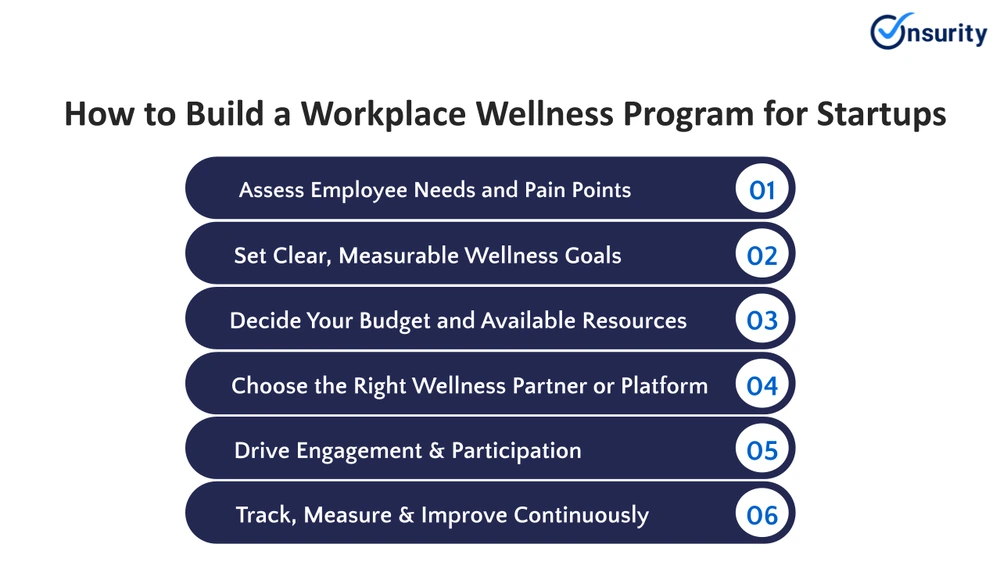
Step 1: Assess Employee Needs and Pain Points
Don’t guess what your team needs, ask them. A team of 20-somethings might prioritize gym memberships and mental health, while a team of millennials and Gen X might value parental insurance and cardiac care.
- Run a Simple Pulse Survey: Use tools like Google Forms or SurveyMonkey to ask anonymous questions about their stress levels, physical health, and what benefits they value most.
- Conduct 1:1 Conversations: For smaller teams (<20 employees), casual chats can reveal deeper insights than a form.
- Analyze Demographics: Look at the age, gender, and location of your workforce. Remote employees will need different support (e.g., ergonomic home setups) compared to office-goers.
Pro Tip: Keep the survey short (under 5 minutes) to ensure high completion rates.
Step 2: Set Clear, Measurable Wellness Goals
“Improving health” is too vague. To prove ROI to your investors (and yourself), you need SMART goals (Specific, Measurable, Achievable, Relevant, Time-bound).
Examples of startup-focused wellness goals:
- Reduce Absenteeism: Decrease sick leave requests by 15% over the next 6 months.
- Boost Engagement: Achieve a 90% participation rate in the annual health check-up drive.
- Improve Culture: Increase employee satisfaction scores (eNPS) related to ‘work-life balance‘ from 6 to 8.
Step 3: Decide Your Budget and Available Resources
Wellness scales with you. You don’t need to offer everything on Day 1.
- The “Must-Haves” (Essentials): Prioritize Group Health Insurance and accident coverage. These are non-negotiable safety nets.
- The “Nice-to-Haves” (Perks): Gym memberships, meditation app subscriptions, and healthy snack counters.
- Start Small: If the budget is tight, focus on high-impact, low-cost initiatives (like flexible hours) before spending on premium perks. Onsurity’s monthly subscription model is specifically designed for startups to manage cash flow while offering premium benefits.
Step 4: Choose the Right Wellness Partner or Platform
For a startup founder or HR manager, administrative bandwidth is scarce. You cannot afford to spend hours managing paperwork, claims, or onboarding new employees onto a health plan.
- Look for Automation: Choose a partner with a digital dashboard that syncs with your HRMS.
- Prioritize Speed: In the startup world, waiting 7 days for a health card is too long. Look for instant digital activations.
- Check for comprehensive support: Ensure the partner offers teleconsultations, medicine delivery, and fitness benefits in one app, so employees don’t have to juggle five different logins.
Step 5: Drive Engagement & Participation
The best wellness program is useless if no one uses it. Startups often face low adoption rates because employees are too busy to notice the emails.
- Gamify It: Run team-based step challenges where the winner gets a voucher.
- Incentivize: Offer small rewards for completing health assessments or attending a wellness webinar.
- Leadership Buy-In: When the CEO shares their own health goals or therapy experiences, it gives permission for the rest of the team to prioritize their well-being.
Step 6: Track, Measure & Improve Continuously
Treat your wellness program like a product,iterate based on data.
- Adoption Rate: What percentage of employees have activated their health accounts?
- Utilization: Are people actually using the teleconsultation or gym benefits?
- Feedback Loops: Conduct quarterly reviews to see what’s working. If nobody uses the “Online Yoga” subscription, swap it for a “Mental Health” partner.
Suggested read: 15 Top Fun Friday Games and Activities for Employees
5 Best Budget-friendly Wellness Ideas for Startups
Most startups focus on “fun” perks, but employees value empathy and stability. Here are 5 low-cost ideas that often go unnoticed but build immense loyalty.
1. The “Life Admin” Half-Day
2. “No-questions-asked” Wellness Days
3. Internal “Skill Barter” Sessions
4. The “Camera-off” Protocol
5. Financial Sessions
How Onsurity Can Help Startups Build a Cost-Effective Wellness Program?
Finding a wellness partner that understands “startup speed” is rare. Traditional insurers often see startups as just “small corporate clients.” They require annual premiums, lots of paperwork, and a minimum headcount that many startups haven’t met yet.
Onsurity flips the script. We built India’s first monthly subscription healthcare platform for employees. It aims to ease the challenges faced by early-stage founders.
Here is the Onsurity advantage:
1. Easy Cash Flow
2. Onboard in Minutes
3. Drive Real Usage
We turn “boring insurance” into a daily utility. The Onsurity app for team members is a one-stop platform for all the healthcare needs of your employees. They can book free teleconsultations, track fitness, and order discounted medicines easily.
4. Built for Small Teams
Conclusion
Creating a workplace wellness program isn’t just a “nice-to-have” anymore; it’s a “must-have” today.
For startups, the equation is simple: Healthy Employees = Healthy Business.
Investing in your team’s physical and mental well-being early on does more than cut sick days. It builds a strong culture that draws in top talent and sparks innovation. Wellness is a long-term investment that pays off in loyalty, productivity, and retention.
Don’t let budget constraints hold you back. Start small, listen to your team, and choose a partner that scales with you.
Ready to build a world-class culture? Request A Demo to see how Onsurity can help you launch an affordable, comprehensive employee wellness program today.
FAQs
1. What is the best wellness program for startups?
The best program is one that is flexible, digital-first, and covers both physical and mental health. With platforms like Onsurity you get monthly subscriptions starting Rs 149/- per employee that include full benefits like insurance and wellness.
2. What are the 5 pillars of employee wellbeing?
The five key pillars are:
Physical Health
Mental & Emotional Health
Financial Wellness
Social/Community Connection
Professional Growth
A holistic program addresses all of these.
3. How much does it cost to implement a workplace wellness program?
Costs vary, but modern digital platforms have made it very affordable. With Onsurity, startups can start comprehensive healthcare and wellness plans for as low as the cost of a few cups of coffee per employee per month.
4. What are the essential components of a startup wellness program?
A startup program should at least offer:
- Group Health Insurance
- Group Accident Insurance
- Group Term Life
- Teleconsultations
- Mental Health Support
- Fitness/Lifestyle Benefits
5. How can small teams participate in wellness activities?
Small teams can try low-cost ideas. They might have “walking meetings,” join step challenges with free apps, or hold “Lunch & Learn” sessions. You don’t need a large crowd to build a culture of health.
6. How do I measure the success of a wellness program?
Track metrics such as:
- Participation rates in wellness events
- Reduction in sick leave
- Retention rates over 6 to 12 months
7. Do startups need health insurance for employees?
Yes, providing health insurance is a critical safety net that builds trust. It is often the deciding factor for top talent when choosing between a corporate job and a startup role.
8. How can Onsurity help startups with employee healthcare?
Onsurity offers a “health benefits membership.” This combines group health insurance with wellness perks like doctor teleconsultations, fitness tracking, and medicine discounts with doorstep delivery. It’s available through a simple monthly subscription, aimed at teams with as few as three members.

Clinical Content Strategist B.Pharma
A Senior Medical and Insurance Content Strategist with over 6 years of experience in healthcare, Ayurveda, and insurance, Diksha has written for industry leaders such as Onsurity, Tata 1mg, mfine, and Medi Assist. A Bachelor of Pharmacy graduate and the creator of the Insurance Dictionary; she holds a Professional Diploma in Counseling Psychology and is certified in Counseling and Guidance by the International Psychological Association.