Table of Contents
- Employee Benefits in India
- What Are Employee Benefits?
- Why Are Employee Benefits Important?
- The 4 Major Categories of Employee Benefits
- What Are the Types of Employee Benefits?
- Unique Employee Benefits
- Conclusion
- FAQs
Employee Benefits in India
Vineet Nayar was the CEO of HCL Technologies. He changed management with a simple idea: “Employees First, Customers Second.’
His logic was simple. In a knowledge-driven economy, growth comes from people. It’s not just about products. For decades, this kind of comprehensive care was a luxury for ‘Big Corps’ like Tata and Infosys. India’s Small and Medium Enterprises (SMEs) and early-stage startups often felt ignored. They were told they were ‘too small’ to matter. High-quality benefits were seen as a ‘sunk cost’ they couldn’t afford.
But in 2026, the rules of the game changed.
Attrition rates in India’s tech and startup sectors fell to 17.1% in 2025. This is down from 17.7% in 2024 and 18.7% in 2023. So, a competitive salary isn’t the only draw anymore. A paycheck can buy a candidate’s time. But if you want their loyalty, trust, and best work, you need to provide a safety net. It’s time to retire the myth that benefits are an expense. In reality, they are the most strategic investment you can make for your business’s survival.
So, what does a modern, high-impact benefits package look like for a growing Indian team? Here is the list of benefits. They cover daily wellness and long-term security. Every HR leader and founder should know about them.
Also read: Top 10 Monetary and Non-Monetary Benefits for Employees
What Are Employee Benefits?
In India, employee benefits are like an “invisible salary.” They protect employees and their families, even when life gets unpredictable. While a monthly paycheck covers the rent and the EMIs, benefits are what provide peace of mind.
These benefits are unique because it’s built on the concept of extended care. In India, professionals often support more than just themselves. They typically provide for their parents, spouse, and children, too. Certain benefits are mandated by law. Employers must give some benefits. These are called statutory or legally required benefits. The benefits that each employer decides to provide are known as discretionary benefits.
To build a winning rewards strategy in India, you have to look at benefits through two lenses:
Expectation: This is the foundation. It includes retirement savings and basic medical fallback. Every professional sees this as a fact. In 2026, just meeting the basics won’t make a company a “Great Place to Work.” It only shows you’re meeting the talent market’s entry requirements.
Care: This is where Indian SMEs and startups truly shine. It’s about offering “Total Protection” that addresses real Indian life. This means insurance that covers parents and in-laws. It also includes quick video consultations for late-night fevers. Plus, there are wellness “wallets” to help with daily medicine and health check-ups.
In our culture, a job is rarely just a contract between two people; it’s a bond between an organization and a family. When a founder shares a solid wellness plan, they send a clear message: “We care about your work and your loved ones.”
Suggested read: Decoding Employee Benefits: A Guide for Indian Founders
Why Are Employee Benefits Important?
1. For the Employee: Security and Wellness
For many workers, benefits act as a safety net. It’s hard and costly to build one on your own.
Financial Protection: Health insurance prevents a single medical emergency from turning into a bankruptcy. Retirement plans offer a clear way to gain future independence.
Work-life Balance: PTO, parental leave, and flexible scheduling help employees rest. They can also take care of personal tasks. This way, they don’t lose income.
Mental & Physical Health: Many modern benefits offer Employee Assistance Programs (EAPs) and gym memberships. This shows that healthy employees tend to be more effective.
2. For the Employer: Talent and Retention
Companies don’t offer benefits just to be “nice”; it’s a strategic business move.
Attracting Top Talent: High performers often compare total compensation packages. A company may offer a lower salary but have great benefits. For example, full remote work or 100% health coverage can attract workers more than a higher pay rate from a competitor.
Reducing Turnover: Replacing an employee is costly. It can often cost 1.5 to 2 times their annual salary. Robust benefits build loyalty and make employees think twice before jumping ship.
Boosting Productivity: When employees don’t worry about paying for a doctor’s visit or retirement, they can focus better on their work
Quick read: Employee Benefit Expenses
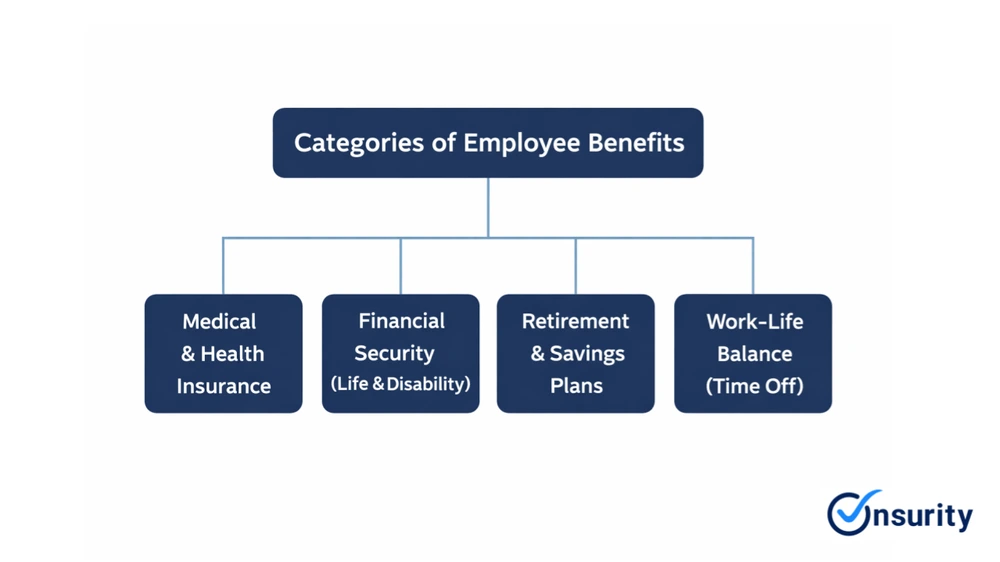
The 4 Major Categories of Employee Benefits
1. Medical & Health Insurance
This is almost always cited as the most important category for employees. It provides a financial safety net against high healthcare costs.
Health Insurance: Coverage for hospital stays, doctor visits, and prescriptions.
Dental & Vision: Specialized care that is often billed separately from general medical.
Wellness Programs: These include preventive steps such as:
- Mental health counseling (EAPs)
- Vaccinations
- Smoking cessation programs
2. Financial Security (Life & Disability)
These benefits protect income if an employee can’t work or dies. They offer peace of mind for the employee’s family.
Life insurance: A payout to beneficiaries if the employee dies.
Short-Term/Long-Term Disability: Gives part of the employee’s salary if they are sick or hurt. This helps when they can’t work.
Accidental Death & Dismemberment (AD&D): Specific coverage for life-altering accidents.
3. Retirement & Savings Plans
This category helps employees build long-term wealth. It prepares them for life after their careers.
Pensions: Though rarer today, these provide a guaranteed monthly income during retirement.
Stock Options/ESOPs:This gives employees a real “stake in the company” by allowing them to buy equity or discounted stock.
4. Work-Life Balance (Time Off)
This covers “non-cash” benefits that provide employees with more time. In today’s “burnout” economy, this time is highly valued.
Paid Time Off (PTO): Combined resources for vacation and sick leave.
Parental Leave: Paid time for mothers, fathers, and adoptive parents.
Flexible Work Arrangements:
- Remote work options
- Four-day work weeks
- Flexible start and end times
What Are the Types of Employee Benefits?
Traditional HR models offer a basic framework. Modern practitioners need to grasp the key factors that impact success in a competitive market. Organizations are changing how they see benefits. Instead of just line items, they view them as key tools for overall well-being.
Benify, a global rewards platform, says benefits serve four main roles in an employee’s daily life:
- Benefits at work
- Benefits for health
- Benefits for financial security
- Lifestyle benefits.
Let’s dive into each benefit type and understand it.
Type 1: Employee Benefits at Work
“Benefits at Work” are the little signs that show employees, “We value your time, growth, and energy.” Today, Indian professionals work some of the longest hours globally. These benefits are key support for your business.
A. Working Hours & the “Integration” Shift
The 9-to-5 is dead. In its place is work-life integration.
ILO data shows that Indian employees spend an average 45.7 hours of work each week. This is among the highest rates globally. Because of this intensity, “Flexibility” has moved from a perk to a top-three priority. 82%of Indian workers now rank work-life balance as more important than pay when choosing a job.
This means high-growth startups are moving toward outcome-based metrics rather than “hours logged.” Offering flexible hours or a “Right to Disconnect” policy builds trust. It gives your team control over their schedules.
B. Skills Development
Indian professionals are the most “growth-hungry” in the world. They don’t just want a job; they want a career upgrade.
A surprising 87% of Indian workers think learning new skills, especially in AI, is key for their future.
Hence offering a budget for certifications or professional courses is a “Retention Super-Power.” Employees who take part in structured learning are less likely to quit their jobs.
C. Food and Beverages
In India, sharing a meal is a cultural cornerstone. In the office, it’s a productivity tool.
Research shows that quality office meal programs can boost productivity by up to 20%.
Tech companies in Gurgaon and Bangalore say shared meals help spark more innovation. This happens more than in formal meetings. It’s where the best ideas happen—over a cup of chai or a shared lunch.
Onsurity Tip: Meal vouchers have seen a 4x tax-exempt hike (up to ₹200 per meal). This is a simple, tax-efficient way to increase your team’s “invisible” take-home pay.
D. Gifts & Activities: The Emotional Connector
Gifting in India is not a transaction; it’s a gesture of belonging.
The Indian corporate gifting market is set to hit $92.32 billion by 2030. A move from “mass-produced” tokens to personalized, culturally grounded gifts drives this growth.
78% of employees report higher job satisfaction after receiving a meaningful, personalized gift. A thoughtful gift bridges the emotional gap in a distributed or hybrid team. This is true whether it is a digital “Wellness Voucher” or a regional handicraft.
According to global company WellSteps views employee wellness through a holistic lens. It focuses on six pillars of well-being that show how benefits impact employees’ lives.
Recommended read: 14 Best Employee Perks
Type 2: Employee Benefits for Health
In the past, Indian companies saw healthcare as just “Hospitalization Insurance.” It was only important in a crisis. In 2026, the perspective has shifted. Top employers now see wellness as a whole. They focus on six pillars that support employees’ lives at work and home.
A. Physical Health
In India, approx 70% of healthcare costs come from out-of-pocket expenses. This mainly covers medicines and doctor visits that don’t need a hospital stay.
Move beyond basic insurance. Include OPD (Outpatient) coverage, digital doctor teleconsultations, and fitness memberships.
Companies that offer “Preventive Care,” like annual check-ups, have a 25% lower absenteeism rate. This is due to chronic illness.
B. Mental & Emotional Well-being
Mental health is no longer a “taboo” topic in the Indian corporate world; it is a business necessity.
- According to the 2025 India Workplace Wellness Report, 86% of employees struggle with mental health; and nearly half of employees report high anxiety. Provide a “Comfort Zone” through Employee Assistance Programs (EAPs). This offers private counseling and stress management tools. Employees can use them anonymously through an app.
C. Financial Wellness
Money stress is the primary thief of productivity in Indian SMEs.
Help your team manage their “Life Goals.” This includes retirement planning (EPF/NPS) and financial literacy workshops. It also offers salary advance options. These features help people steer clear of high-interest predatory loans.
When an employee isn’t worried about their next EMI or a sudden medical bill, their focus at work increases by 3x.
D. Social & Community Connection
Humans are social beings. In the “Work-from-Anywhere” era, loneliness is becoming a bigger risk.
- Foster a “Culture of Belonging.” It’s not only about Zoom calls. It’s about team-building, community volunteering, and social programs. These help employees feel part of a mission, not just a paycheck.
E. Nutritional Health
Helping your team with their diet is very important. Lifestyle diseases like diabetes are increasing in India.
If you have an office, provide healthy snacks and clean drinking water. If remote, offer nutritional coaching or meal vouchers that encourage healthy eating habits.
A 2026 study showed that workers who have healthy food options at work report 15% more energy in the afternoon.
F. Occupational & Lifestyle Balance
This is where “Work” meets “Life.” It’s about ensuring the work-life rhythm is sustainable. Focus on ergonomics (correct desk/chair setup) and career satisfaction. Ensure that the job is safe, the tools are right, and the workload allows for a “recharge” after hours.
Related read: How To Incorporate Employee Benefits For DEI Inclusion in India?
Types 3: Employee Benefits for Financial Security
Financial stress is the quietest thief of productivity. In 2026, a salary is only half the story; the other half is how you help your team protect and grow that money.
Modern financial benefits in India now focus on three key areas:
- Retirement
- Wealth Creation
- Tax Optimization
A. Retirement & Pension Plans
We’ve moved past the days of “just EPF.” Today’s savvy employees look for a multi-layered retirement strategy.
National Pension System (NPS): In 2026, the NPS became a tax-saving powerhouse. Employers can now contribute 14% of the basic salary, up from 10%. This change gives employees a tax-free boost to their future wealth.
EPF Updates: The Employees’ Provident Fund (EPF) is key to Indian savings. The 2026 reforms make it easier to withdraw funds for important life events, like buying a home or getting an education. This change turns EPF into a more “active” asset for your team.
B. Insurance
Insurance in 2026 is no longer about “buying a policy”; it’s about outsourcing your biggest risks. For an Indian SME, these four pillars ensure that a single bad day doesn’t wipe out years of hard work.
Group Health Insurance (GHI): This is your team’s “Daily Safety Net.” It includes everything from 2 a.m. doctor teleconsultations to major hospital surgeries. It shields your employees from all emergency hospitalisation to planned ones.
Group Term Life Insurance: This ensures a guaranteed “Lump Sum” payout to an employee’s family if they pass away. It provides peace of mind. Even if the breadwinner is absent, the family’s finances and children’s education are secure.
Group Personal Accident (GPA) Insurance: This insurance is for “Life on the Move.” It covers accidental death. It also covers permanent and temporary disabilities that regular health plans may miss.
Business Insurance for SMEs: This is “Insurance for the Founder.” It protects your office, equipment, and legal liabilities from fires, theft, and cyberattacks. It helps your business keep going. You can start operations right away after a disaster. This way, you won’t use up your working capital.
C. Financial Growth: ESOPs & Wealth Sharing
In the thriving Indian startup and AI ecosystem of 2026, employees want to be owners, not just workers.
The ESOP Magnet: Employee Stock Option Plans (ESOPs) are key for building wealth. They link the employee’s hard work to the company’s value. This makes them long-term stakeholders.
Performance Bonuses: Moving from “flat bonuses” to Outcome-based Incentives ensures that high-performers see a direct correlation between their effort and their bank balance.
D. Personal Finance Benefits (The “CFO for Employees”)
Money management is hard. Helping your team do it better is a high-value, low-cost benefit.
Financial Literacy: 2026 has seen a surge in Corporate Financial Wellness programs. Bringing in experts to teach your team about tax planning, mutual funds, or EMI management helps reduce their daily stress.
Earned Wage Access (EWA): Lets employees get part of their earned salary early. This modern benefit helps with cash flow before payday. This helps them avoid high-interest “predatory loans” during mid-month emergencies.
Quick read: Compensation and Benefits in HR
Type 4: Lifestyle Benefits: Designing a Sustainable Rhythm
Lifestyle benefits are the “soft” rewards that have the “hardest” impact on retention. In a time of hybrid work and long commutes, these benefits matter. They show that employers care about employees’ lives outside of work.
A. Mobility & the Modern Commute
In cities like Bangalore, Mumbai, and Gurgaon, commuting can be very stressful. For many employees, it’s the worst part of their day.
High-growth companies are moving beyond “company cars.” They provide commuter stipends. You can use them for ride-sharing apps, fuel reimbursements, or EV charging partnerships.
Many Indian startups are now promoting the “Green Office.” They reward employees who use public transport or carpool with “Green Bonuses.” This helps align lifestyle choices with sustainability.
B. The “Home Office” Ecosystem
Hybrid work is here to stay. The “kitchen table office” won’t cut it anymore.
Offer a one-time setup stipend for ergonomic chairs.
Include funds for high-speed internet backups, which are vital during Indian power cuts.
Provide money for noise-canceling headphones.
Investing in an employee’s home ergonomics isn’t just a perk; it’s a productivity play. A comfortable employee is 15% more productive. They also have fewer back and neck problems. This reduces the chance of long-term sick leave.
C. Work-Life Integration
Balance means a 50/50 split. Integration understands that life is messy and non-linear.
Move beyond standard leaves. In 2026, we’ve seen a rise in “No-Meeting Fridays.” There are also mandatory “Recharge Weeks.” These are annual breaks when all servers and emails stop. This ensures everyone gets real rest.
Many Indian tech firms are testing 4-day (or 4.5-day) workweeks to reduce burnout. This move is inspired by success seen worldwide. Data show that these teams often maintain the same output as 5-day teams due to higher focus and morale.
This is a major Indian pain point. Giving subsidies for childcare or eldercare shows a clear understanding of the “Sandwich Generation.” They face many daily challenges.
Also read: How To Structure Employee Benefits for Your Remote Teams
Unique Employee Benefits
1. Professional & Personal Growth
These are often overlooked. They need the employee to take the first step.
Lifestyle Spending Accounts (LSA): Unlike an HSA, this is post-tax money from your employer that you can spend on “wellness.” This often includes gym memberships. It can also mean national park passes or gym classes.
Tuition & Certification Reimbursement: Many companies will pay for your Master’s degree or professional certifications, like PMP or CPA. This support is available if the programs relate to your career path.
Free Books/Audible Subscriptions: Some tech and creative firms offer a monthly stipend for any book you want to read, no questions asked.
2. Family & Life Support
Companies are increasingly trying to support the “whole person,” not just the worker.
Egg Freezing & Fertility Treatments: This benefit can be worth over $20,000. Many people don’t know it’s covered until they need it.
Surrogacy or Adoption Assistance: Financial grants help cover the big legal and medical costs of adding to your family.
Pet Insurance & “Pawternity” Leave: Some companies give discounts on pet insurance. Others even offer paid leave for a few days when you adopt a new pet.
Bereavement for Non-Immediate Family: Some new policies let you take leave for the loss of close friends or pets. This expands the usual “immediate family” definition.
3. Financial
These can save you significant money on expenses you’re already paying for.
Employee Discount Portals: Many sites offer big discounts. You can save 10–25% on cell phone plans, laptops, rental cars, and movie tickets.
Student Loan Repayment Assistance: Some employers pay a monthly amount to your student loan servicer. This works like a “reverse” 401(k).
Legal Services: For just a few dollars a month, you can access a lawyer. They can help with tasks like drafting a will, reviewing a lease, or fighting a traffic ticket. These tasks may seem boring, but they can be costly.
4. Wellness & Mental Health
Travel Assistance: If you get sick or hurt while on vacation, some insurance plans provide “Global Rescue” services. They can fly you home or help with your care.
Free Therapy Sessions: Many companies have an Employee Assistance Program (EAP). You get 3 to 6 free sessions each year. These sessions are with a therapist or financial counselor. They can help with various issues. It’s entirely confidential and rarely used.
Also read: Employee Benefits for a Team of 5: Is it Possible in India?
Conclusion
Employee benefits are not just “perks.” They show a company’s values and are key for success. Standard packages offer security, but the real benefits often go unnoticed. These unique perks help build a culture of care and encourage long-term loyalty. Building a comprehensive benefits stack shouldn’t be a full-time job for a founder or HR lead. Onsurity helps India’s SMEs and startups.
Whether you are a team of 3 or 300, Onsurity provides a seamless, tech-first platform that scales with you:
The Monthly Advantage: Say goodbye to heavy annual premiums. With a monthly subscription model, you protect your cash flow while protecting your team.
A “Super App” Experience: Manage everything in one place, from 2 a.m. doctor calls to doorstep medicine delivery. Also, enjoy mental wellness sessions and track your fitness.
Total Family Protection: Our plans let your employees add spouses, children, parents, and in-laws easily. With a minimal extra cost you can also buy healthcare membership for your siblings as well.
Claims Made Easy: Our in-house “Good Doctors” team is here to help. We guide your team through hospitalization and claims. You won’t need to play the middleman.
Don’t just offer a job; offer a safety net that covers the people who matter most to your team. Join 8,000+ businesses already caring the smarter way.
FAQs
1. What are employee benefits?
Employee benefits are perks that workers receive besides their regular pay. They aim to offer financial security, boost work-life balance, and enhance job satisfaction.
2. What are the four types of employee benefits?
Mentioned below are the 4 types of employee benefits:
a) Benefits at work
b) Benefits for health
c) Benefits for financial security
d) Lifestyle benefits
4. What is the most common type of employee benefits?
Employees value good healthcare, flexible work options, and retirement matching. Financial stability and time control are the top two factors for keeping talent.
5. Do employee benefits really matter?
Absolutely. These benefits are often the “tie-breaker” when a candidate chooses between two similar salary offers. Good benefits lower turnover. They also reduce employee stress. Plus, they build a culture where workers feel the company cares about their long-term well-being.
6. Can you offer different benefits to different employees?
Yes, but you must be careful. You can adjust benefits based on things like tenure, job role, or location. But it’s illegal to discriminate based on protected classes such as race, gender, or age.